English
 Français
 عربى
عربى
Why Custom Crystal Curtain Finials Elevate Window Design
Custom crystal curtain finials transform ordinary curtain rods into statement pieces that anchor room design and reflect individual aesthetic preferences. Unlike mass produced finials limited to standard shapes and sizes, bespoke crystal finials allow precise coordination with chandelier crystals, heirloom glassware, or architectural details specific to a residence. The refractive quality of cut crystal captures and disperses natural light, creating subtle rainbow effects that shift throughout the day and add dimensional interest to window treatments that static materials cannot replicate. For luxury residential projects, boutique hotels, and formal event venues, custom crystal finials represent the definitive finishing touch that distinguishes professional interior design from basic window covering installation.
The bespoke decorative hardware market, including custom crystal finials, generated approximately $890 million in global revenue during 2024, with crystal and glass segments growing at 7.2 percent annually. This expansion reflects increasing consumer willingness to invest in personalized architectural details that mass market retailers cannot provide. Understanding the material options, manufacturing processes, and specification requirements for custom crystal curtain finials ensures that commissioned pieces deliver both visual impact and functional durability.
Crystal Material Options and Optical Properties
Not all crystal compositions perform equally in curtain finial applications. Material selection affects brilliance, weight, durability, and cost in measurable ways that influence both appearance and longevity.
Lead Crystal Traditional Specifications
Full lead crystal contains minimum 24 percent lead oxide (PbO), with premium grades reaching 30 to 33 percent. This lead content increases refractive index from approximately 1.5 for standard glass to 1.545 or higher, producing the characteristic sparkle and fire associated with fine crystal. For curtain finials, lead crystal offers unmatched brilliance and weight that conveys substance and quality. A 150 millimeter lead crystal finial weighs approximately 800 to 950 grams, providing sufficient mass to balance heavy drapery rods without appearing bulky.
However, lead crystal requires careful handling due to its relative softness. Mohs hardness of 5.5 to 6.0 makes lead crystal susceptible to surface scratching during installation and routine cleaning. Lead content also raises regulatory considerations; while curtain finials do not contact food or beverages, some jurisdictions restrict lead content in decorative items accessible to children. Manufacturers now offer lead crystal finials with protective surface coatings that reduce lead exposure risks while preserving optical properties.
Lead Free Crystal and Advanced Glass Compositions
Modern lead free crystal substitutes barium oxide, zinc oxide, or potassium oxide for lead oxide, achieving refractive indices of 1.52 to 1.54 with improved chemical durability and environmental compliance. Schott Zerodur and similar glass ceramic materials offer thermal stability and hardness exceeding traditional crystal, though at significantly higher cost. For curtain finials in high traffic commercial environments or homes with young children, lead free crystal provides 90 percent of lead crystal's optical performance with enhanced safety margins.
Optical Crystal and Precision Grades
Optical grade crystal manufactured to stringent clarity standards eliminates bubbles, seeds, and striations that scatter light in lower quality materials. Custom finial commissions should specify optical grade material when designs incorporate large crystal masses exceeding 100 millimeters diameter, where internal imperfections become visible and detract from appearance. Optical crystal commands 40 to 60 percent premiums over standard decorative crystal but proves essential for designs emphasizing transparency and internal light transmission.
| Material Type | Lead Content | Refractive Index | Mohs Hardness | Relative Cost |
|---|---|---|---|---|
| Full Lead Crystal | 24 to 33% | 1.545 to 1.560 | 5.5 to 6.0 | Base reference |
| Lead Free Crystal | None | 1.520 to 1.540 | 6.0 to 6.5 | 10 to 20% premium |
| Optical Grade Crystal | Variable | 1.540 to 1.560 | 5.5 to 6.5 | 40 to 60% premium |
| Glass Ceramic | None | 1.520 to 1.540 | 7.0 to 7.5 | 80 to 120% premium |
Cut Styles and Faceting Techniques
The cutting pattern applied to crystal finials determines how light interacts with the material, creating distinctive visual signatures that range from subtle elegance to dramatic brilliance.
Brilliant Cut Maximizing Light Return
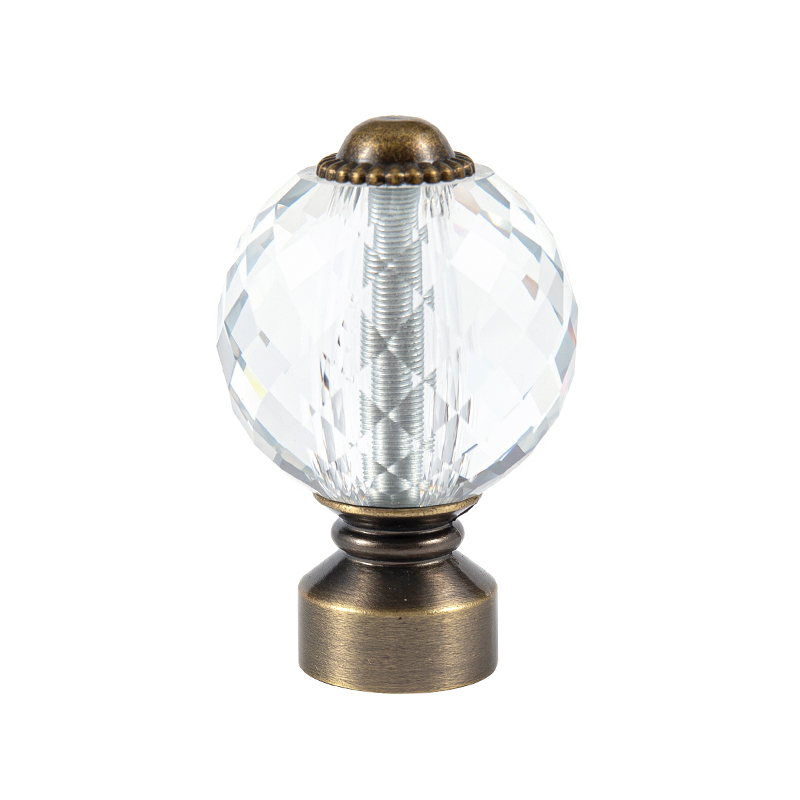
Brilliant cut patterns feature triangular and kite shaped facets arranged to maximize light return through the finial front surface. This technique, adapted from gemstone cutting, produces intense sparkle and fire visible across room distances. A typical brilliant cut crystal finial of 100 millimeters height contains 80 to 120 individual facets, each requiring precise angular control within 0.5 degrees of specification to achieve optimal optical performance. The complexity of brilliant cutting explains its premium pricing; each finial requires 4 to 6 hours of skilled artisan labor.
Step Cut Elegant Geometry
Step cut patterns utilize rectangular facets arranged in concentric tiers, creating hall of mirror effects and broad flashes of light rather than pinpoint sparkle. This style suits contemporary interiors where geometric precision complements minimalist architecture. Step cuts emphasize crystal clarity and material purity over cutting complexity, making them somewhat more economical while maintaining sophisticated appearance. Custom step cut finials allow incorporation of client initials, logos, or dates through strategic facet placement.
Mixed Cut and Fantasy Designs
Mixed cut finials combine brilliant and step cut sections, placing brilliant crowns atop step cut pavilions or vice versa. This versatility allows designers to optimize different viewing angles; brilliant sections face room interiors for maximum sparkle, while step cut sections visible from oblique angles provide clean geometric lines. Fantasy cuts incorporate curved surfaces, engravings, or organic shapes impossible with traditional faceting machinery. These designs require hand polishing and specialized tooling, extending production timelines to 3 to 4 weeks per piece.
Sizing Proportions and Scale Relationships
Proper finial sizing ensures visual balance with both the curtain rod and overall room proportions. Oversized finials overwhelm delicate treatments, while undersized finials appear insignificant against bold drapery.
Rod Diameter to Finial Scale Ratios
Standard practice recommends finial diameter at 1.5 to 2.5 times the curtain rod diameter. For a 28 millimeter rod, this suggests finial diameters of 42 to 70 millimeters. Crystal finials at the larger end of this range create dramatic punctuation marks suitable for formal drawing rooms and master suites. Smaller ratios suit understated contemporary spaces where finials should not compete with architectural features or artwork.
Finial length typically measures 1.5 to 3 times rod diameter, with longer proportions creating vertical emphasis that visually increases ceiling height. A 150 millimeter long finial on a 25 millimeter rod extends 125 millimeters beyond the rod end, requiring adequate wall clearance to prevent contact. Custom commissions must account for available space between rod ends and adjacent walls, windows, or furniture.
Room Scale Considerations
Ceiling height significantly influences appropriate finial scale. Rooms with 3 meter or higher ceilings accommodate larger finials that would appear disproportionate in standard 2.4 meter residential spaces. Window width also matters; wide picture windows or sliding glass doors benefit from substantial finials that visually anchor expansive curtain spans. Narrow windows in compact rooms require restrained finial sizes to maintain proportional harmony.
Mounting Hardware and Attachment Systems
Crystal finials require secure mechanical attachment to curtain rods without compromising crystal integrity or visible appearance.
Threaded Metal Insert Configurations
Most custom crystal finials incorporate threaded metal inserts, typically brass or stainless steel, cast or bonded into the crystal during manufacturing. These inserts accept matching threaded rods extending from finial bases, allowing screw on attachment. Insert pullout strength must exceed 50 kilograms to prevent detachment under accidental impact or curtain pulling forces. Premium manufacturers ultrasonically test insert bonds and provide pull test certificates for individual pieces.
Set Screw and Compression Mounts
Alternative mounting systems utilize set screws or compression collets gripping rod ends without threading. These systems suit installations where rod threading proves impractical or where finial rotation is desired for aesthetic adjustment. Set screws require rubber or nylon tipped ends to prevent scratching metal rod finishes. Compression mounts accommodate slight rod diameter variations but may loosen over time with thermal cycling and vibration.
Adhesive Bonding for Permanent Installation
Some custom designs bond crystal finials directly to rod ends using structural adhesives. UV cured acrylic adhesives provide transparent bonds with strengths exceeding 15 megapascals on properly prepared surfaces. This method eliminates visible metal hardware but complicates future finial replacement. Adhesive bonding suits display installations and permanent residential features where component interchangeability is not required.
Color Treatments and Specialty Finishes
Beyond traditional clear crystal, custom finials offer color and surface treatments that expand design possibilities.
Ionic Surface Coloring
Ionic surface treatments diffuse metal ions into crystal surfaces, creating permanent colors without coatings that could peel or wear. Gold ion treatment produces amber and ruby tones, while cobalt creates deep sapphire blues. These colors remain transparent, allowing light transmission and refraction while adding chromatic warmth. Surface color depth typically extends 10 to 50 micrometers, sufficient for durability without significantly affecting light transmission.
Metallic Coatings and Vapor Deposition
Physical vapor deposition applies thin metal layers to crystal surfaces, creating mirror like or tinted reflective effects. Silver and gold coatings produce classic luxurious appearances, while champagne and bronze tints coordinate with contemporary metal finishes. Coating thicknesses of 100 to 200 nanometers provide complete coverage without obscuring underlying cut patterns. These coatings require protective overcoats to prevent oxidation and scratching during handling.
Frosted and Etched Surfaces
Acid etching or sandblasting creates satin frosted surfaces that diffuse light softly rather than refracting it sharply. Partial frosting, where clear and frosted areas alternate in patterns, produces subtle design interest without the intensity of full brilliant cutting. Etched monograms or crests personalize finials for estate properties, corporate offices, or commemorative installations. Frosted surfaces hide minor surface imperfections and fingerprints, reducing maintenance requirements in high touch installations.
Commissioning Process and Supplier Selection
Ordering custom crystal curtain finials involves structured collaboration between designers, clients, and specialized manufacturers to achieve desired outcomes within budget and timeline constraints.
Design Brief Development
Effective commissions begin with comprehensive design briefs specifying dimensions, material preferences, cut styles, colors, and mounting requirements. Reference images of existing crystal objects, architectural details, or inspirational pieces help communicate aesthetic direction. Technical requirements including weight limits, rod compatibility, and installation constraints must accompany aesthetic preferences. Professional crystal manufacturers provide design consultation services translating conceptual descriptions into manufacturable specifications.
Prototyping and Sample Approval
Complex custom designs warrant prototype production before full order commitment. Prototyping costs range from $200 to $800 per design depending on size and complexity, credited against subsequent production orders. Physical prototypes reveal scale relationships, weight distribution, and optical effects impossible to evaluate from renderings alone. Allow 2 to 4 weeks for prototype production and shipping before final approval.
Production Timelines and Quality Assurance
Custom crystal finial production requires 4 to 8 weeks from approved design, with complex fantasy cuts or large dimensions extending to 12 weeks. Quality assurance includes dimensional verification against design tolerances of plus or minus 0.5 millimeters, visual inspection for bubbles and inclusions, and mounting hardware pull testing. Reputable suppliers provide certificates of authenticity documenting material composition and origin for lead crystal pieces.
Installation Care and Long Term Maintenance
Crystal finials require specific handling and cleaning protocols to preserve appearance and prevent damage throughout their service life.
Safe Handling During Installation
Crystal finials chip and fracture if dropped or struck against hard surfaces. Installers should wear cotton gloves to prevent fingerprint oils from etching into crystal surfaces over time. Support finial weight during attachment rather than allowing hardware to bear full load during threading. Work over padded surfaces to cushion accidental drops. Never apply torque directly to crystal bodies; use appropriate wrenches on metal mounting hardware only.
Cleaning Protocols for Optimal Appearance
Dust accumulation dulls crystal brilliance within weeks of installation. Clean finials monthly using lint free microfiber cloths and diluted isopropyl alcohol or specialized crystal cleaning solutions. Avoid ammonia based cleaners that can etch lead crystal surfaces over repeated use. Never spray cleaning solutions directly onto mounted finials; overspray may damage wall finishes or curtain fabrics. Instead, dampen cloths and wipe gently, following facet directions to avoid catching cloth fibers on sharp edges.
Environmental Protection Measures
Direct sunlight through south facing windows can heat crystal finials to temperatures exceeding 60 degrees Celsius, potentially degrading adhesive mounts or causing thermal shock if cold cleaning solutions contact hot surfaces. In high sun exposure installations, specify UV resistant mounting adhesives and schedule cleaning for early morning or evening when finial temperatures have equilibrated with ambient conditions. Humidity fluctuations cause metal mounts to expand and contract at different rates than crystal, potentially loosening connections over years; annual inspection and retightening prevents unexpected detachment.
Cost Structure and Budget Planning
Custom crystal curtain finials represent significant investments requiring realistic budget allocation.
Standard custom crystal finials in lead crystal with brilliant cuts range from $150 to $400 per piece for sizes of 80 to 120 millimeters. Lead free crystal adds 20 to 30 percent premiums. Optical grade material and complex fantasy cuts escalate costs to $600 to $1500 per finial. Color treatments, metallic coatings, and personalized engravings add $50 to $200 per piece depending on complexity. For a master suite with two windows requiring four finials total, custom crystal hardware represents $600 to $6000 investment before rod and bracket costs.
These costs compare to $20 to $80 for mass produced metal or resin finials, making custom crystal appropriate only for projects where distinctive appearance justifies premium expenditure. Value engineering options include using custom crystal finials on primary display windows while specifying standard finials on secondary rooms, or commissioning crystal finials for one focal window per room rather than all windows uniformly.
Commission custom crystal curtain finials when standard options cannot achieve desired aesthetic coordination, when room scale demands substantial decorative hardware, or when investment properties benefit from distinctive features enhancing perceived value. Specify lead crystal for maximum brilliance in formal traditional interiors, lead free crystal for health conscious or regulatory sensitive environments, and optical grade material for designs emphasizing transparency and purity. Verify mounting hardware ratings exceed finial weight by minimum 100 percent safety margins, and establish cleaning protocols with household staff or maintenance personnel to preserve appearance across decades of service.