English
 Français
 عربى
عربى
When you start shopping for curtain rods, the first question that usually comes to mind is not about style or finish. It is about length. What lengths are actually available? The answer is more predictable than many buyers expect. Before you measure anything, you should know that most manufacturers produce rods in a limited set of standard length ranges: 28-48 inches, 48-84 inches, 66-120 inches, and 120-170 inches. These are the four ranges that cover nearly every residential window in North America and Europe.
Once you understand those ranges, the rest of your purchasing decision becomes easier. You just need to know which range fits your window, whether you need an adjustable rod, and whether the rod material can support an uninterrupted span. This guide will walk you through those decisions in practical terms, from the standard sizing chart to the installation rules that keep long rods from sagging.
The reason these specific ranges exist is rooted in packaging and shipping. A rod collapsed to 48 inches fits neatly into a courier-friendly carton, while a rod expanded to 170 inches could never ship as a single rigid piece. Telescoping rods solve this by nesting metal tubes. The four ranges are a compromise between usable coverage and logistical practicality. If you work with a supplier that manufactures rods in these ranges, your warehouse operations become much simpler, because you can predict carton sizes and load plans without continuous measurement.
However, standard ranges only help if you know how to choose the right one. A rod that is too short will cause curtains to cover the glass. A rod that is too long will look awkward and may be unnecessary in small rooms. This is why the process begins with window width and ends with material selection. In the following sections, we will cover each step in order, so that by the time you place an order you have a complete specification.
Standard Curtain Rod Length Ranges
Curtain rods are not manufactured in every individual inch. Instead, they are built as adjustable or telescoping rods that expand within a fixed range. This design keeps inventory manageable while allowing installers to fit a wide variety of windows. The table below shows the four most common length ranges, the window widths they typically serve, and the environments where they work best.
| Rod Length Range | Typical Window Width | Best Use Scenario |
|---|---|---|
| 28-48 inches | 14-36 inches | Small bedroom windows, bathroom windows, and narrow sidelights. |
| 48-84 inches | 30-72 inches | Standard single and double-hung windows in bedrooms, living rooms, and dining rooms. |
| 66-120 inches | 50-108 inches | Large picture windows, sliding glass doors, and double windows placed side by side. |
| 120-170 inches | 100-160 inches | Wide patio doors, floor-to-ceiling glazing, and commercial spaces with continuous window walls. |
Notice that the ranges overlap. A 48-84 inch rod can cover a window that is 30 inches wide and also a window that is 72 inches wide. The overlap matters because the same rod can be adjusted in the field. However, the more you extend a telescoping rod, the thinner the overlap between the inner and outer tube becomes. This affects rigidity. For very long spans, you need a rod with a thicker diameter or a center support bracket.
When purchasing for a project, you should always choose the range that covers your required rod length with at least 10-15 percent remaining adjustability. Do not choose a rod that is already fully extended, because the locks may not hold as securely and the middle section will be more likely to flex.
In many parts of the world, especially Europe and the United Kingdom, rod lengths are measured in centimeters and meters. The equivalent standard ranges are 70-120 cm, 120-210 cm, 165-300 cm, and 300-430 cm. These convert directly to the inch-based ranges above. Suppliers who export to multiple markets often label products with both units to avoid confusion during customs clearance and on-site installation. If you are sourcing from a factory, always confirm which unit is being used on the technical drawing before you sign off.
Another reason to know the ranges well is that stock rods are shipped collapsed. A 28-48 inch rod ships in a box that is close to 30 inches long. If your distribution center uses automated carousels or conveyor systems, the carton dimensions need to be checked against the machine's opening size. Some 120-170 inch rods collapse to only 70 inches, which is still longer than many standard carton tunnels. This is a practical consideration that affects not only freight cost but also handling efficiency.
How to Determine the Right Rod Length for Your Window
Rod length is not the same as window width. The rod must extend beyond the window's outer edges so that open curtains do not block the glass. The accepted rule is that a rod should extend at least 6 inches past each side of the window, but the ideal extension for a modern look is 8 to 12 inches per side. Some designers push to 15 inches for dramatic full-drape effects.
To calculate the minimum rod length, follow this formula:
- Measure the outer width of the window frame from left to right.
- Add the desired left extension (usually 6 to 12 inches).
- Add the desired right extension (the same amount as the left side).
- The total is the minimum rod length you need.
For example, if your window is 48 inches wide and you want 10 inches of extension on each side, the total rod length is 48 + 10 + 10 = 68 inches. That fits inside the 48-84 inch range with plenty of room for adjustment.
If you want the curtains to stand completely clear of the window, you also need to account for the curtain's own width. A standard panel is roughly 1.5 to 2 times the width of the rod when drawn closed. When open, the panel stacks at the end of the rod. If you use thick, heavy fabrics, the stack takes up more room. In those cases, increase the extension to 12 inches or more per side.
For floor-to-ceiling windows or sliding doors, the same formula applies but you should also measure the height. Height is not directly part of rod length, but it influences the number of panels you need. A wider rod without enough curtain fabric will look sparse and cheap, while a narrow rod with too much fabric will look bunched and unsightly.
Measuring the window width is simple when the window is rectangular. Start at the outside edge of the frame, not the inside of the glass. Do not measure the glass itself, because that would give you a rod that ends inside the frame. The outside edge of the frame is the reference point. If you have a wooden trim that protrudes from the wall, the rod should extend at least as far as the trim decoration. Otherwise, the curtains will hit the trim and appear misaligned.
For windows that are recessed into the wall, the rod can be installed inside the recess or outside it. If you install inside the recess, the rod length must not exceed the inner width of the recess. This is a typical situation for bay windows and alcoves. In that case, you do not add any extension, and the finials must also fit within the opening. Some customers choose an outside mount precisely to avoid this restriction.
If you are still deciding between a decorative single rod and a double rod setup, our complete guide on curtain rod types, installation tips, and how to choose provides a broader overview that can help you narrow down your options.
Projection and Diameter: Two Specifications That Change the Fit
Length is only one part of the sizing equation. Two other measurements have a direct effect on how well the rod functions: projection and diameter.
Projection
Projection is the distance between the wall and the center of the rod. It determines how far the curtain hangs from the wall. A standard projection is about 3 to 4 inches, while some decorative finial rods offer 5 inches or more. For curtains with blackout lining or heavy pleats, greater projection prevents the fabric from rubbing against the wall. For rods used above bay windows or behind blinds, projection also matters for clearance.
The easiest way to measure projection requirements is to hold a curtain panel against the wall and see how far it needs to hang to clear the window hardware. If you plan to install valances or a second curtain layer, you may need a double bracket system that offsets the rod from the wall by 4 to 6 inches. In these cases, projection is not a single number but a layered requirement. Suppliers often list the overall projection for each bracket model, so you can compare that with the depth of your blinds and the thickness of your carpet and baseboards.
Diameter
Diameter is the thickness of the rod tube. Most residential rods use a 5/8 inch, 3/4 inch, or 1 inch diameter. The diameter directly affects the weight capacity and the maximum unsupported span. A 5/8 inch rod is fine for lightweight curtains on a 28-48 inch span. But if you need to cover a 90-inch window with heavy velvet panels, a 1 inch rod is much safer. A thicker rod also reads visually as a more substantial design element, which works well in formal living rooms.
The table below summarizes the relationship between diameter, typical maximum unsupported length, and curtain weight.
| Diameter | Common Use | Max Unsupported Span | Recommended Curtain Weight |
|---|---|---|---|
| 5/8 inch | Light fabrics, sheer curtains, small windows | 48-60 inches | Up to 8 lbs per rod |
| 3/4 inch | Medium fabrics, standard windows | 60-80 inches | Up to 15 lbs per rod |
| 1 inch | Heavy curtains, wide windows, commercial spaces | 80-120 inches | Up to 25 lbs per rod |
If your rod length exceeds the maximum unsupported span for the diameter, you need a center support bracket. This is especially true for rods longer than 84 inches. Many manufacturers include a center support with their telescoping rods, but not all. Check the product description before you order.
Diameter also affects the visual proportion of the finial and the curtain rings. A larger diameter rod requires larger rings, and the rings will typically have a wider inner circle. If you mix a small ring with a large rod, the ring will not slide smoothly. When you are matching a rod to a ring, look at the ring's inner diameter, not just the outer decorative width. For a 1 inch rod, choose a ring with an inner diameter of at least 1.5 inches.
The weight capacity figures in the table are conservative. They are based on an even load, no center support, and standard brackets placed at the ends. If the curtain is very heavy or the rod is mounted on irregular walls, reduce the maximum span. For example, a 3/4 inch rod rated to 80 inches may still start to sag at 70 inches if the fabric is dense velvet. Trust the practical test rather than the printed capacity.
Material Choice Affects Maximum Unsupported Length
Metal thickness and material stiffness determine how much a rod will bow under load. For any given length, an aluminum rod will flex less than a PVC-wrapped rod of the same outer diameter if the wall thickness is different. Conversely, an iron rod can support more weight but is also heavier. The practical implication is that the material you choose should match the length you need.
Aluminum curtain rods are a popular choice for modern interiors because they are lightweight, corrosion-resistant, and available in a range of anodized finishes. For lengths up to 120 inches, a well-made aluminum rod with a 3/4 inch diameter and a center support will hold most standard curtains. The slim profile also makes them easy to handle during installation.
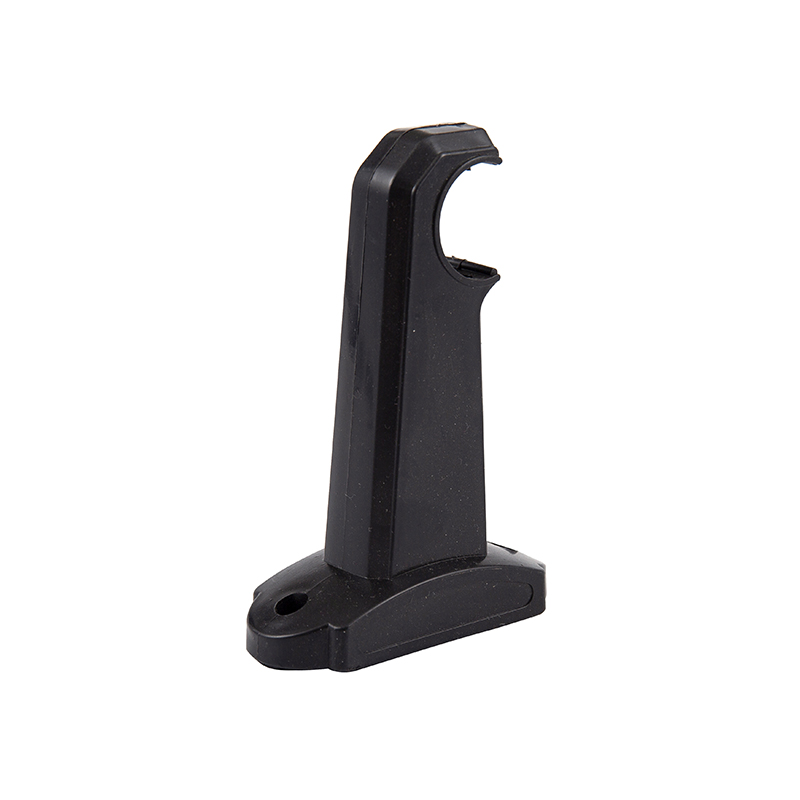 Single Crescent Aluminum Curtain Rod for Arched and Bay WindowsThis curved aluminum rod offers a crescent shape with customizable radius, anodized finishes, and a 12kg load capacity. Its slim honeycomb design and hidden mounting suit modern interiors and dramatic drapes.View Product →
Aluminum rods are particularly good for ordering in bulk because their density is low. A 120-inch aluminum rod might weigh only 2 pounds, whereas the same length in iron could weigh 5 pounds or more. For a 1000-unit order, this difference in weight translates directly to freight cost. Aluminum is also the easiest material to anodize, giving it a matte silver or black finish that resists scratches. If you supply a design company that wants a uniform modern look, aluminum rods and brackets can be matched to the same finish number.
Iron rods are significantly stronger than aluminum at the same diameter. A single 1 inch iron rod can span a 100-inch window without a center support, but the added weight makes installation a two-person job. The twisted iron telescoping design gives you the adjustability of a standard range while maintaining the industrial durability that many commercial buyers look for.
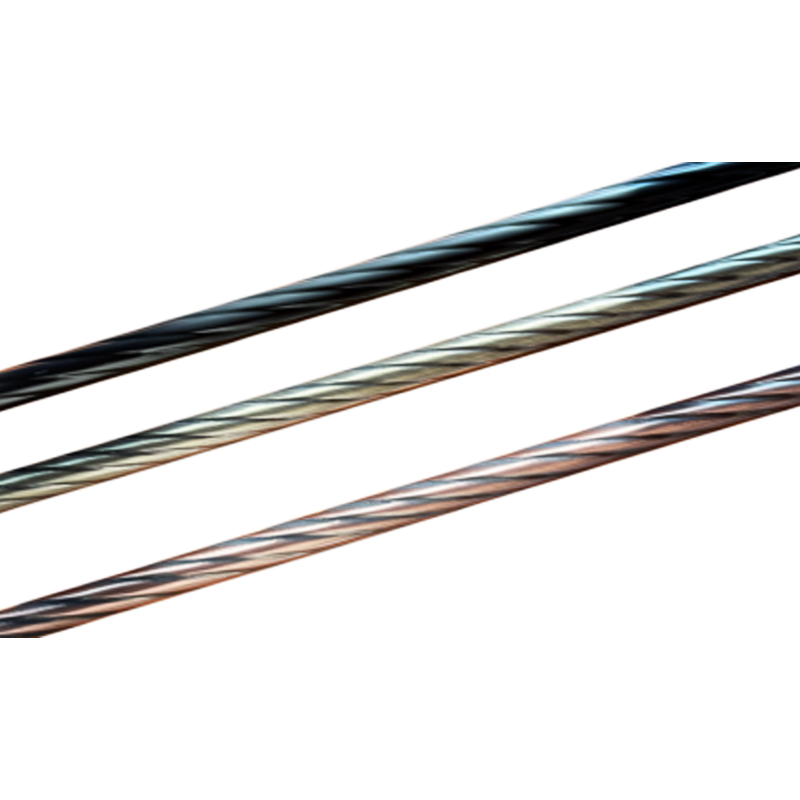 Twisted Iron Telescoping Curtain Rod with Adjustable LengthThis high-carbon steel rod features a decorative twist, spring-loaded locks, and tool-free adjustment from 80 to 240cm. It supports up to 15kg, ideal for rustic or classic spaces needing sturdy hanging.View Product →
Iron rods are the best choice for applications that require a rustic or traditional aesthetic. They are also commonly specified for heavy blackout curtains in schools, hotels, and conference rooms. The key is to ensure that the iron is coated with a rust-preventive finish, especially in humid environments. If the rod core is exposed during installation or cutting, you must seal the cut ends with a primer to avoid oxidation.
PVC-wrapped rods offer a different set of trade-offs. The PVC coating protects the metal core from moisture and reduces noise when rings slide across it. For long lengths, a PVC-wrapped rod needs a sturdy inner metal tube; otherwise, the coating can crack at the telescoping joint. The decorative sticker finishes available on PVC rods let you match specific color schemes without the cost of custom powder coating.
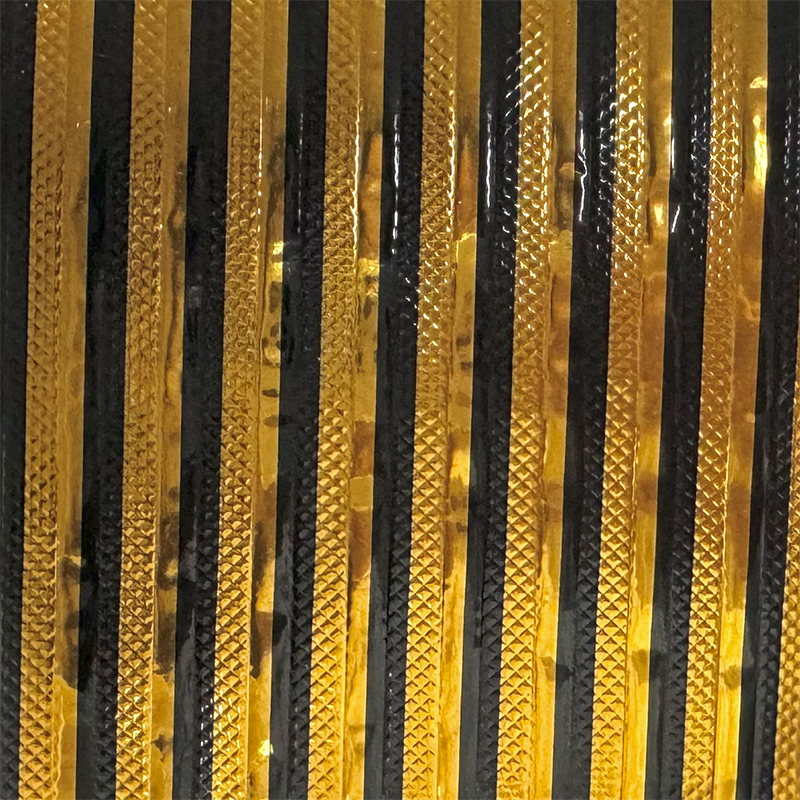 Dualtone Sticker Curtain Rod with Gradient FinishThis rod combines a carbon steel core with an ABS coating, offering gradient color transitions and tool-free installation. It supports 22kg and extends to 4m, perfect for versatile and modern decor.View Product →
PVC wrapped rods are usually the most economical option. They can be printed with wood grain, gold, silver, or titanium gold patterns, which makes them an excellent choice for rental properties or budget-friendly retail lines. Because the PVC surface is softer than metal, it also acts as a bumper against the curtain ring, reducing the clicking sound that occurs when metal rings slide on metal rods. This is a subtle but real advantage in bedrooms and quiet office spaces.
When buying in bulk, material choice also affects your warehouse inventory. Aluminum and PVC rods are lighter, which reduces freight cost per unit. Iron rods are heavier but offer a premium weighty feel. Knowing the average rod length your customers order will help you decide which material to stock in larger quantities.
For any material, the wall thickness of the tube, not just the outer diameter, is the true indicator of stiffness. Two rods can both be 3/4 inch in diameter, but one may have a 0.5 mm wall while the other has a 1.2 mm wall. The thinner wall will flex much more. Always ask the supplier to specify the wall thickness in the technical drawing. For a 120-inch span, we recommend a minimum wall thickness of 1.0 mm for aluminum and 0.8 mm for iron.
Telescoping Rods: The Practical Solution for Non-Standard Windows
Most standard curtain rods are telescoping, meaning the rod consists of two or more nested tubes that slide into each other. The length range tells you the minimum and maximum extension. A 48-84 inch telescoping rod starts at 48 inches and expands to 84 inches. You lock it at the desired point using a twist-lock or spring-loaded mechanism.
Telescoping rods are not a compromise; they are the solution for houses where windows are not exact multiples of a fixed size. They also make shipping easier, because the compact package fits into a smaller carton. For international orders, this reduces the dimensional weight cost, especially when shipping multiple units.
However, telescoping rods have a hidden limitation. When you extend a rod to near its maximum length, the overlapping section between the inner and outer tubes becomes shorter. This reduces the stiffness of the rod at the joints. Certain telescoping designs address this with a thicker outer tube or an additional support sleeve. Others rely on a center support bracket to prevent sagging.
For your own inventory, it is helpful to stock a few different ranges rather than a single adjustable rod that tries to cover every possibility. A single rod that stretches from 28 to 120 inches would be too flexible in the middle when fully extended. For that reason, we recommend carrying all four standard ranges, not just one or two.
The locking mechanism is another point that differs between manufacturers. Low-cost telescoping rods often use a plastic thumbscrew that presses directly onto the inner metal tube. With repeated use, the screw may flatten the tube or create a visible indentation. Higher-end rods use an internal spring that presses a hardened pin into a slot, or a wedge lock that compresses the inner tube from the inside. If your customers are installing in rental properties or hotels where the rod is adjusted often, choose a locking system that does not leave marks.
When you measure for a telescoping rod, you need to know the maximum length that the rod can reach after the finials are installed. Some manufacturers list the rod length including finials, while others list only the tube. This difference can be a full inch on each end. For a 120-inch window, a rod listed as 120 inches may actually cover only 118 inches of usable span after subtracting the finials. Always verify whether the specified range refers to the tube or the overall assembly.
How Window Style and Curtain Length Influence Rod Length
The style of the window and the intended curtain length will change the amount of extension you need long before you pick a rod. Here are some common scenarios and the lengths they require.
Casement Windows and French Doors
Casement windows open outward, so the curtains must be pushed fully clear of the swing path. A longer extension, usually 12 to 15 inches per side, is necessary. For French doors, the rod should extend at least 12 inches past the door frame on both sides so that the panels can stack without blocking the entryway.
Bay Windows
Bay windows are typically installed at a 45-degree angle. A single straight rod across the bay will not allow the curtains to hug the window line. Instead, you often need a curved or three-section rod, or two individual rods mounted at an angle. The total length is more complex, and you should measure each segment separately.
Floor-Length Curtains
If your curtains reach the floor, the rod must be mounted close to the ceiling so that the fabric hangs in a long, continuous line. This means the rod length must be measured not only for width but also for the visual tension created by the full drop. Many installers recommend mounting the rod 4 to 6 inches below ceiling level, or at 100% of the window height plus the curtain length. The extension per side should be at least 10 inches to allow the panels to lift and drop without touching the wall.
Sill-Length Curtains
For café curtains or sill-length styles, the rod is typically mounted in the middle of the window or immediately above the bottom sash. The length can be shorter because the curtains do not stack along the full window width. A 4-6 inch extension per side is often enough.
Another style that affects rod length is the use of a single panel or a pair of panels. If you use a single panel that is drawn to one side, the rod does not need to extend equally on both sides. In the open position, the panel will stack on one side, so that side needs a wider extension. On the opposite side, the rod can sit close to the wall because the panel does not slide onto it. This asymmetrical setup is common for sliding glass doors where the curtains are tied to one side.
When installing a rod above a window that has a deep sill, you also have to account for the way the curtains will overlap the sill. If the rod is too low, the hemline of the curtain will rest awkwardly on the sill. If the rod is mounted too high, the fabric may drag on the floor. The length of the rod affects the horizontal span, but the height positioning determines the vertical relationship with the sill. Both measurements should be taken from a single level line so that the whole window looks aligned.
Ordering Common Lengths for B2B and Bulk Projects
If you are a distributor, curtain manufacturer, or hotel procurement manager, standard length ranges are more than a consumer convenience. They are the basis of a repeatable ordering system. Every time you source rods, you can reference the same four ranges and expect consistent carton dimensions, packaging, and weight. This simplifies your cost calculation and lets you forecast freight costs accurately.
In a typical bulk order, you will receive rods in their collapsed state. For example, all 48-84 inch rods ship in a 49-inch carton. All 66-120 inch rods ship in a 67-inch carton. If your warehouse has limited vertical space, you may prefer to stock fewer long rods and more medium rods. However, the demand for long rods often comes from commercial projects with large sliding doors, so omitting the 120-170 inch range may cost you those orders.
When negotiating with suppliers, ask about the actual maximum length in each range. A rod that is advertised as 120 inches might only reach 118 inches due to the lock mechanism design. This two-inch difference matters when you are installing it on a 116-inch window with 6-inch extensions. Always request a spec sheet that lists the exact minimum and maximum length before you commit to a purchase.
Custom lengths are another option. For a dedicated retail line or a specific hotel window design, you can order fixed rods cut to exact lengths. This is particularly common when the mounting points are known in advance. The trade-off is that fixed rods cannot be adjusted in the field, so your sales team must be confident in the dimensions they provide.
For B2B buyers, the minimum order quantity (MOQ) often depends on the range. Some factories have a higher MOQ for the 120-170 inch range because those cartons require special handling. Others have a lower MOQ for the shorter ranges because they are produced in higher volume. If you are mixing ranges in a single container, you need to confirm that the supplier can ship different carton sizes under one packing list. This is a common source of confusion in import orders.
Also check the weight per carton. A 120-170 inch iron rod carton can weigh more than 25 pounds, which means a 40-foot container can only carry a limited number of units before reaching the maximum payload. Aluminum and PVC rods allow you to load more units per container. If your freight cost is a large part of your landed cost, this simple weight difference can determine whether a project is profitable or not.
When you are sourcing for a hospitality project, you may want to specify that the rods come with all necessary hardware pre-packed in a single unit. This includes brackets, screws, anchors, and finials. If the hardware is packed separately, installers can lose pieces or mix up sizes. A well-structured B2B supplier will pack the hardware in a small bag attached to the rod tube, with the required screw count printed on the label.
Installation Checklist for Long Curtain Rods
Even if you choose the correct length, improper installation can cause a rod to sag, sway, or pull out of the wall. The following checklist covers the critical steps for rods longer than 84 inches or for heavy curtain panels.
- Mark the mounting height first. Standard rod height is 6 inches above the window frame, but you can adjust this based on the curtain length you want.
- Locate wall studs before drilling. If you cannot find a stud, use a robust toggle bolt with a weight rating equal to at least 2.5 times the expected curtain weight.
- Hold the rod against the wall to verify that the brackets sit vertically level. A small laser level makes this much faster.
- Install the center support bracket before attaching the rod. This is essential for spans over 80 inches.
- Attach the finials to the rod before hanging it. This prevents the end caps from rolling off while you are adjusting the brackets.
- If using a telescoping rod, tighten the locking mechanism at the middle joint. Do not overtighten, as this can strip the plastic insert.
- After installation, pull the curtains back and forth to check that no part of the fabric drags on the wall or touches the window handle.
For commercial spaces, use stainless steel screws with a heavy-duty anchor. Many building codes require that decorative fixtures be able to support a certain load without falling. Consult your local codes if you are outfitting a public space.
The type of wall you are mounting into changes the anchor choice. In drywall, plastic toggle bolts work well for rods under 60 inches, but for longer rods, metal toggle bolts or expanding inserts are safer. In concrete or brick, you need a masonry drill bit and nylon or zinc anchors. In wood trim, simply use wood screws that go at least 1.5 inches into the framing. Never rely on a single screw at the center support. The center bracket should be secured with two screws, one on each side of the bracket, even if the bracket only appears to need one.
The bracket spacing is also critical. For rods up to 66 inches, two brackets are usually enough, one at each end. For rods over 80 inches, add a center bracket. For rods over 120 inches, many installers add two center brackets, spaced evenly between the end brackets. This is especially important if you have multiple curtain rings moving across the rod, because each ring adds a concentrated point load at a different location.
When you are mounting a telescoping rod, you should extend it to the exact final length before drilling the bracket holes. If you drill with the rod collapsed and then extend it, the brackets may not sit vertically. If you drill with the rod fully extended and then adjust it, the bracket spacing will be wrong. The safest sequence is to measure the final projection and mark the wall, then install the end brackets, then install the center bracket, and finally drop the rod into place.
Common Mistakes When Selecting Curtain Rod Length
A few recurring errors cause the majority of curtain rod returns. Here are the ones that matter most in practice.
Using Window Width as Rod Length
This is the most common mistake in amateur installations, and it is not entirely the buyer's fault. Many product descriptions narrow the rod range to the window size, making it seem as though a 48-inch rod is meant for a 48-inch window. In reality, you need additional length on both sides. If you order a 48-inch rod for a 48-inch window, your curtains will cover a large part of the glass and you will lose natural light.
Overlooking the Projection Clearance
A rod with a small projection may not clear a window handle or a radiator cover. When you measure the rod length, you also need to account for the depth of the wall and any protruding hardware. Use a 4-inch projection as a baseline and increase it to 5 inches for thick curtains.
Choosing a Rod That Is Already at Maximum Extension
If the standard range fits but you are at the very top end, the rod will be less stable. For instance, a 48-84 inch rod on an 80-inch window leaves only 4 inches of telescoping overlap. A slightly larger range, like 66-120 inches, would give you a more stable middle section and better support.
Forgetting the Finial Width
Finials add 1 to 3 inches to each end of the rod. If your installation space is tight, the rod plus finials may not fit between two walls. Always measure the clearance on both sides before you order.
Ignoring the Curtain Stack Width
Heavy curtain panels stack into a thick bunch when drawn open. The stack width is roughly 10-15% of the panel width. If you do not extend the rod enough, the stacked fabric will cover the edge of the window and block light.
Not Buying a Center Support for Long Panels
Even if you have a thick rod, a long span without a center support will sag over time. The sag may be only half an inch, but it is visible against the window. Center brackets are inexpensive and easy to install, so there is no reason to skip them. If your rod does not come with one, purchase one that matches the diameter.
Mismatching the Rod Length with the Curtain Fullness
If you choose a rod length that is barely wider than the window, you will not have enough space for the curtain stack when the panels are open. The result is a cramped look. For a full and elegant appearance, add at least 8 inches per side, and if the curtains are heavy or textured, add 12 inches per side.
Standard curtain rod lengths are not arbitrary. They are the result of manufacturing practices that balance efficiency, shipping economics, and load-bearing capacity. By learning the four common ranges and the simple rule of adding 6 to 12 inches per side, you can confidently order the correct rod for nearly any residential window. For large projects, pay close attention to diameter, projection, and the need for a center support. These details will save you from costly returns and ensure a clean, professional result.
Remember that length is only the starting point. The right rod must also match the curtain weight, the installation wall, and the visual scale of the room. If you are buying for a business, always test a sample in your own window before committing to a container. This will reveal whether the advertised range actually extends to the specification and whether the locking mechanism holds firm under repeated use.
Ultimately, a well-chosen curtain rod is a durable hardware element that supports the fabric, enhances the window, and gives your room a polished finish. Take your time with the measurements, confirm the material specifications, and choose a telescoping range that leaves you room to adjust. That simple process eliminates 90 percent of the problems that arise with curtain rod installation.