English
 Français
 عربى
عربى
Curtain rods are one of those purchases that seem straightforward until you're standing in front of a wall of options trying to decide whether the material actually matters. It does — significantly. The rod material determines how much weight the rod can support without bowing, how it holds up in humid environments like bathrooms and kitchens, how easily it can be cut or adjusted on site, and what aesthetic it contributes to the room. For most standard residential windows with lightweight to medium curtains, an aluminum curtain rod is the most practical all-round choice. PVC wrapped rods offer moisture resistance and design flexibility at a lower cost. Iron curtain rods carry the most weight and suit formal or traditional interiors. Knowing what distinguishes each type makes it possible to choose with confidence rather than guessing.
What to Consider Before Choosing a Curtain Rod Material
Before comparing specific materials, four practical factors should frame the decision. Getting these right eliminates most of the guesswork:
Curtain Weight and Span
The rod must support the full weight of the curtain fabric across its installed span without visible sagging. A standard pair of sheer voile panels weighs approximately 0.5–1.0 kg. Heavyweight blackout curtains or thermal-lined drapes for the same window can weigh 3–6 kg or more. Longer spans amplify deflection — a rod supporting 3 kg over a 150 cm span behaves very differently from the same rod spanning 250 cm. Iron is the strongest material and maintains straightness under the highest combined loads. Aluminum performs adequately for most residential spans when properly supported. PVC-wrapped rods have the lowest load tolerance and are not suitable for heavy fabrics or spans above approximately 180 cm without a center support bracket.
Room Environment and Moisture Exposure
Bathrooms, shower rooms, and kitchens expose curtain rods to humidity, condensation, and occasional direct moisture. Bare iron rods will rust in these environments without robust protective finishing. Aluminum naturally resists corrosion. PVC-wrapped rods are the most moisture-tolerant of the three and are often the preferred choice specifically for bathroom and kitchen window applications.
Installation Method and Wall Type
Heavy iron rods require secure bracket fixings into wall studs or masonry — plasterboard alone is insufficient for spans above 150 cm with heavy curtains. Aluminum and PVC-wrapped rods are lighter, reducing the structural demand on wall fixings, and are more forgiving in stud-free plasterboard installation with appropriate toggle anchors.
Aesthetic Contribution to the Room
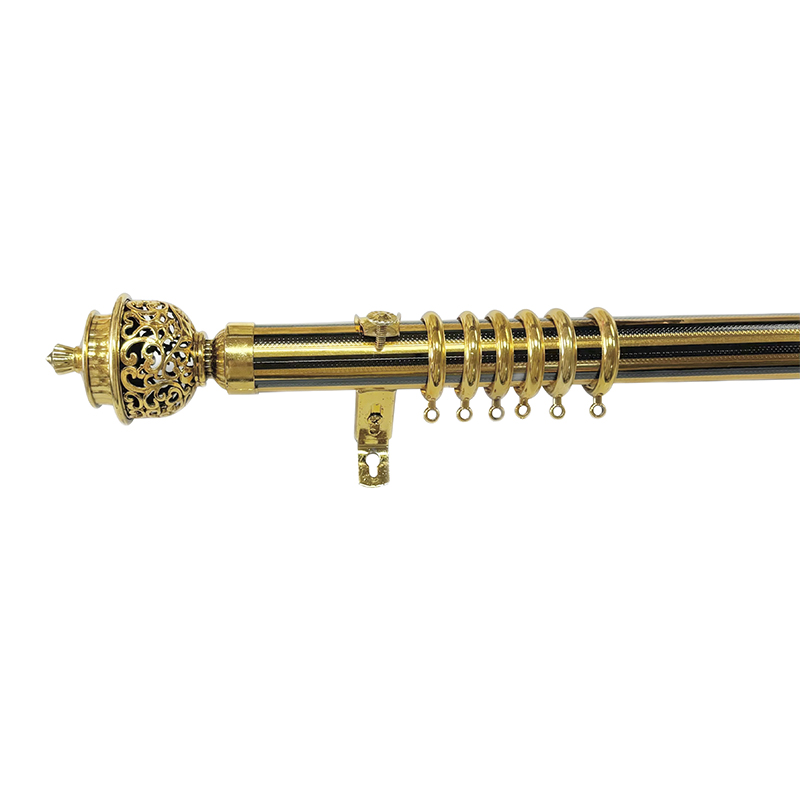
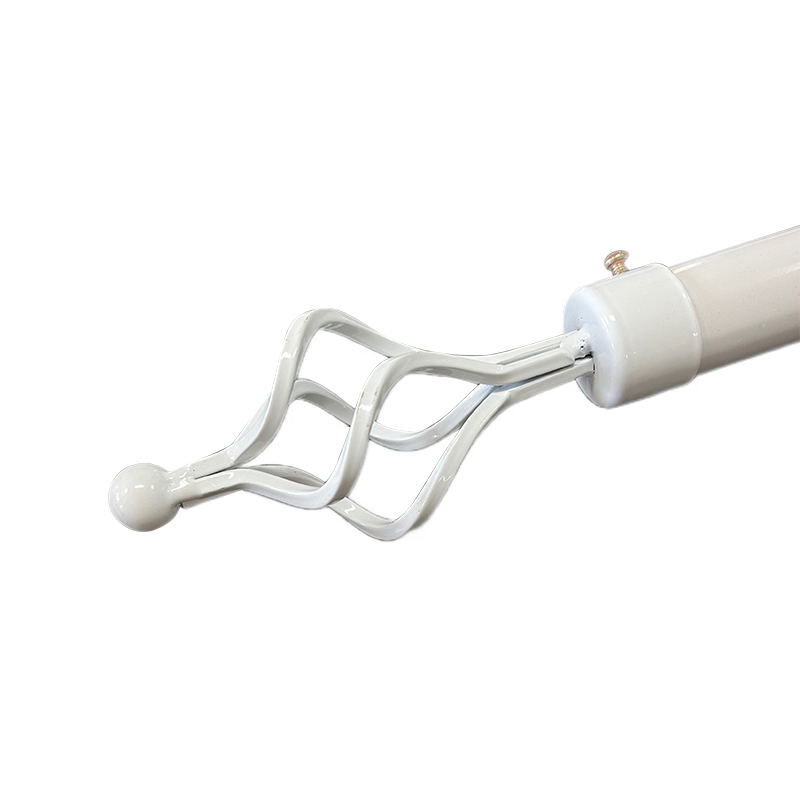
Curtain rods are visible in most installations — the rod, brackets, and finials form part of the window's visual frame. Iron rods with decorative finials contribute a formal, traditional, or industrial character. Aluminum rods in brushed silver, matte black, or gold finishes suit contemporary and transitional interiors. PVC-wrapped rods are the most neutral and are available in the widest range of surface patterns, including wood grain and metallic wraps that approximate more expensive materials at lower cost.
PVC Wrapped Curtain Rods: Versatile and Moisture-Resistant
A PVC wrapped curtain rod consists of a metal core — typically a steel or aluminum tube — encased in a molded or extruded PVC (polyvinyl chloride) outer layer. The PVC wrapping serves both a protective and decorative function: it shields the metal substrate from moisture and mechanical wear while providing a surface that can be produced in virtually any color, texture, or pattern without painting or plating.
Where PVC Wrapped Rods Excel
The moisture resistance of PVC makes these rods the technically correct choice for bathrooms, wet rooms, and kitchen windows where condensation and steam are regular factors. Unlike bare metal rods, the PVC surface cannot corrode, and unlike painted finishes on iron or aluminum, the PVC wrap does not chip, peel, or require reapplication. A PVC-wrapped rod in a steamy bathroom will look the same in ten years as on installation day — a performance claim that neither bare iron nor painted aluminum can consistently match in high-humidity conditions.
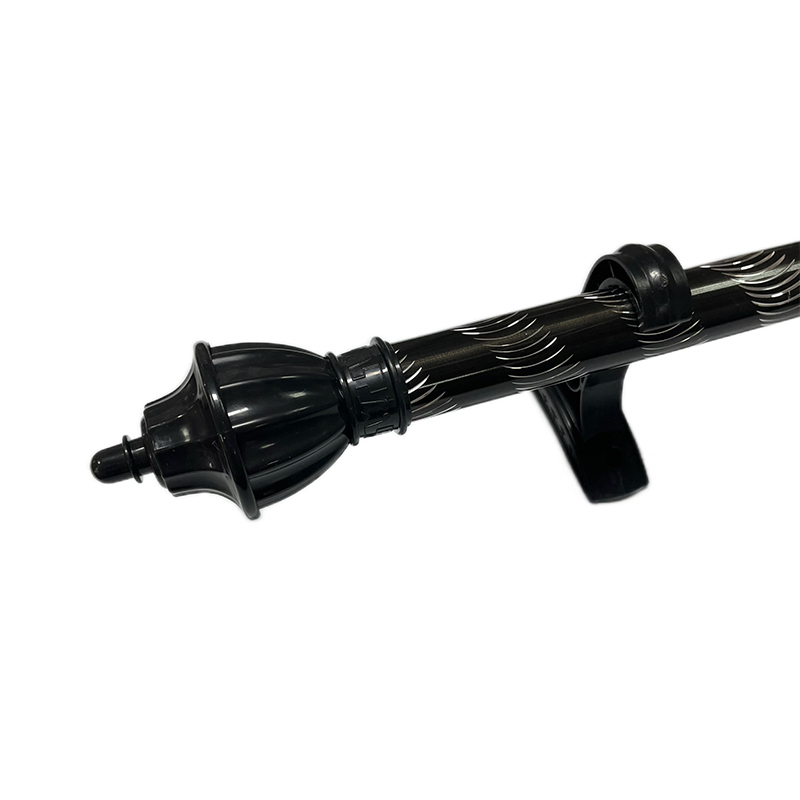
PVC wrapped rods also benefit from their surface design flexibility. Wood grain wraps convincingly approximate the look of timber curtain poles at a fraction of the cost and with significantly better moisture resistance — timber poles swell and warp in humid environments, while the wood grain PVC wrap over a metal core does not. Marble-effect, brushed gold, and matte black PVC wraps are available that match contemporary interior design trends without the cost or weight of premium metal alternatives.
Load Capacity and Span Limitations
The structural performance of a PVC wrapped rod depends entirely on the metal core, not the PVC layer. Rods with a solid steel core perform significantly better than those with a thin aluminum core or hollow steel tube. However, the PVC wrapping does add weight without adding structural strength, and the overall profile diameter is typically 25–35 mm — larger than an equivalent bare metal rod, which can make ring hooks and eyelet curtains harder to slide. For spans above 180 cm, a center support bracket is strongly recommended regardless of core material. Maximum load recommendations for PVC wrapped rods are typically 15–25 kg total across the full span for quality products with solid steel cores.
Cutting and On-Site Adjustment
PVC wrapped rods can be cut to length on site using a standard hacksaw or pipe cutter, but the cut end requires finishing — either a replacement end cap or a fresh finial — to conceal the exposed metal core and PVC edge. The cut quality of the PVC wrap at the end affects the visual finish, and a clean, square cut is more important than with bare metal rods where any roughness is less visible. Most manufacturers supply end caps with their rod sets for this purpose.
Typical Price Range
PVC wrapped curtain rods are among the most affordable options available, typically ranging from $8–$35 per rod for standard residential lengths (100–200 cm), making them the default choice for budget-conscious buyers and rental properties.
Aluminum Curtain Rods: The Practical All-Round Choice
Aluminum curtain rods are manufactured from extruded aluminum alloy — most commonly a 6000-series alloy — formed into round, oval, or flat-profile tubes. The surface is typically anodized (an electrochemical oxide layer that increases hardness and corrosion resistance) or powder-coated in a range of standard finishes including brushed silver, matte black, champagne gold, and satin nickel.
Why Aluminum Is the Most Widely Specified Residential Rod Material
Aluminum offers a combination of properties that no single competing material matches across all categories. It is approximately one-third the weight of steel at equivalent dimensions, making it easy to handle and install without requiring heavy-duty wall fixings. It does not rust — the natural aluminum oxide layer that forms immediately on the surface prevents further corrosion, making it suitable for kitchen and bathroom applications without special coating. It is machinable and can be cut cleanly to exact length with a standard metal hacksaw, and its extruded form produces consistent diameter and straightness tolerances that ensure curtain rings glide smoothly throughout the service life.
Anodized aluminum surfaces are significantly more durable than painted finishes — the anodic layer is integrated into the aluminum substrate rather than applied on top, so it cannot peel or chip under normal use. A brushed anodized aluminum rod in a bathroom will maintain its appearance indefinitely without any maintenance beyond occasional wiping.
Load Capacity by Wall Thickness and Diameter
Aluminum rod load capacity varies significantly with tube diameter and wall thickness. Standard residential rods in 19–25 mm diameter with 1.2–1.5 mm wall thickness support total curtain loads of 15–30 kg at spans up to 200 cm with two brackets. Heavy-duty aluminum rods in 28–35 mm diameter with 2.0+ mm wall thickness support 30–50 kg and are suitable for spans up to 300 cm — adequate for bay windows and large picture windows with full-length blackout drapes. For spans above 200 cm, a center bracket is recommended regardless of tube specification.
Profile Options and Curtain Compatibility
Aluminum curtain rods are available in several profile shapes beyond the standard round tube:
- Round tube: The most common profile. Compatible with curtain rings, eyelet curtains (when sized correctly), and tab-top curtains. Clean, versatile, and available in the widest range of diameters and finishes.
- Flat or rectangular profile: Used in contemporary minimalist interiors. Curtains typically hang from clip rings or specialized flat-rod hooks. Provides a cleaner visual line than round profiles but has lower torsional stiffness under uneven loading.
- Double rod systems: Two parallel aluminum rods on a single bracket set — the front rod carries sheer or voile curtains; the rear rod carries blackout or decorative drapes. Allows full light control with a single installation.
- Ceiling-mounted track profiles: Flat or I-beam aluminum extrusions designed for ceiling or wall track mounting with glider hooks. Common in healthcare, hospitality, and commercial interiors for floor-to-ceiling curtain installations.
Typical Price Range
Standard aluminum curtain rods range from $12–$60 per rod for residential sizes. Heavy-duty large-diameter rods with premium anodized finishes reach $50–$120. Double rod systems add $20–$40 over the equivalent single rod cost.
Iron Curtain Rods: Maximum Strength and Traditional Character
Iron curtain rods — manufactured from wrought iron, cast iron components, or solid steel tube with decorative iron-look finishing — are the heaviest and strongest of the three materials. They are the traditional choice for formal, period, rustic, and industrial interior styles, and their weight and solidity communicate a level of permanence and quality that lighter materials cannot replicate.
Structural Performance: Where Iron Is Unmatched
Iron and steel have significantly higher tensile and flexural strength than aluminum at equivalent cross-sections. A 25 mm diameter solid iron rod resists deflection under load approximately three times more effectively than an equivalent aluminum tube — making iron the correct specification for:
- Very heavy curtains — thermal-lined drapes, velvet curtains, or interlined formal drapes that can weigh 5–10 kg per panel
- Long spans in large rooms — bay windows, floor-to-ceiling installations in high-ceilinged formal spaces, or commercial hospitality environments
- Installations where the rod is deliberately visible as a design element — a thick wrought iron rod with handcrafted decorative finials becomes a furniture piece in its own right in a traditional or rustic interior
- Commercial or contract installations requiring rods to be effectively permanent — hotels, restaurants, and period property renovations where strength and longevity are prioritized over convenience
Finish Options and Corrosion Protection
Iron corrodes without surface protection — unlike aluminum, it does not form a self-protecting oxide layer. Quality iron curtain rods are finished by one or more of the following methods:
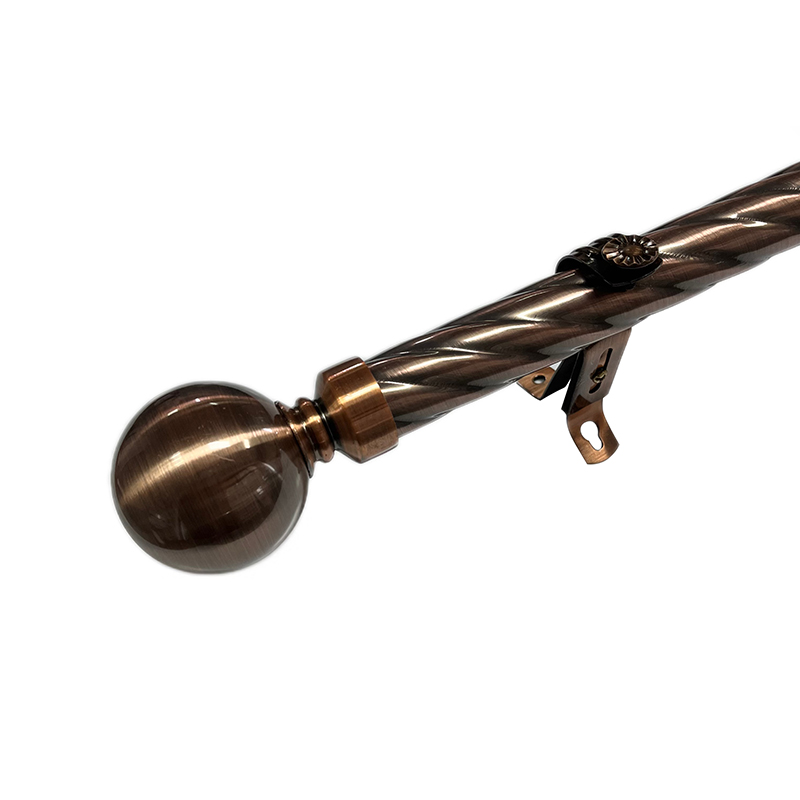
- Powder coating: A durable electrostatically applied polymer finish baked onto the surface. Available in matte black, oil-rubbed bronze, antique iron, satin nickel, and other decorative finishes. Powder coating is the most durable finish option for interior iron rods — resistant to chipping and providing good moisture protection in normal living spaces.
- Paint or lacquer: Applied liquid finish that provides reasonable corrosion protection but is more susceptible to chipping at bracket contact points and ring wear areas over time. Lower-cost iron rods often use spray lacquer rather than powder coating.
- Wax or oil treatment (for genuine wrought iron): Traditional handcrafted wrought iron rods are often finished with a combination of heat-applied wax and linseed oil, which provides a characterful, slightly uneven patina and reasonable corrosion resistance for dry interior environments. Not suitable for bathrooms without regular maintenance.
For bathroom and kitchen applications, powder-coated iron rods with a fully sealed finish can be used, but aluminum or PVC-wrapped rods remain more suitable choices due to their inherent moisture tolerance without dependence on surface finish integrity.
Weight and Installation Requirements
The weight of iron rods places real demands on wall fixings. A solid iron rod at 25 mm diameter weighs approximately 3–5 kg per meter before any curtain load — compared to under 1 kg/m for aluminum at equivalent diameter. For a 200 cm iron rod with heavy curtains, total combined weight of 15–25 kg on the bracket fixings is realistic. Brackets must be fixed into masonry, timber studs, or adequately rated plasterboard anchors — surface-only plasterboard fixings are insufficient for iron rod installations at this scale. Professional installation or careful use of stud finders and appropriately rated wall anchors is recommended.
Typical Price Range
Iron curtain rods span the widest price range of the three materials. Mass-produced iron-finish steel rods (steel tube with iron-look powder coat) are available from $15–$50 per rod. Genuine wrought iron rods with handcrafted decorative finials from specialist suppliers range from $60–$200+ per rod. Custom-fabricated iron rods for commercial or period property installations have no fixed upper price limit.
Full Comparison: PVC Wrapped vs Aluminum vs Iron Curtain Rods
| Attribute | PVC Wrapped | Aluminum | Iron |
|---|---|---|---|
| Structural Strength | Low–Moderate (core-dependent) | Moderate–Good | Excellent |
| Moisture Resistance | Excellent | Very Good | Moderate (finish-dependent) |
| Typical Max Load | 15–25 kg | 15–50 kg | 30–80+ kg |
| Weight of Rod Itself | Light–Moderate | Light | Heavy |
| Ease of Cutting On-Site | Moderate (end finishing needed) | Easy | Difficult (requires metal saw) |
| Ring / Eyelet Glide | Good (smooth PVC surface) | Excellent (anodized surface) | Good–Moderate (finish-dependent) |
| Aesthetic Range | Widest (any wrap pattern) | Wide (many finishes/profiles) | Formal, traditional, industrial |
| Maintenance Required | Minimal | Minimal | Low–Moderate (finish care) |
| Typical Price Range | $8–$35 | $12–$120 | $15–$200+ |
Curtain Rod Diameter: How Size Affects Performance and Appearance
Rod diameter is one of the most important but frequently overlooked specifications. It affects structural performance, curtain compatibility, and visual proportion in the room.
| Diameter | Typical Application | Max Recommended Span | Suitable Curtain Weight |
|---|---|---|---|
| 16–19 mm | Small windows, cafe curtains, lightweight sheers | 120 cm | Up to 5 kg total |
| 20–25 mm | Standard residential windows, medium-weight curtains | 200 cm | Up to 20 kg total |
| 28–35 mm | Large windows, bay windows, heavy drapes | 300 cm | Up to 40 kg total |
| 38–50 mm | Statement installations, commercial, very heavy drapes | 400+ cm (with supports) | 50 kg+ total |
Visual proportion matters as much as structural adequacy. A 16 mm rod in a tall, wide window looks undersized and fragile regardless of whether it technically supports the load. A 50 mm rod above a small bathroom window looks oversized and heavy. As a general rule, rod diameter should visually balance with the window width and curtain weight — larger windows and heavier fabrics warrant larger diameter rods both structurally and aesthetically.
Room-by-Room Recommendation Guide
Applying the right rod material to each room type — rather than using the same specification throughout — delivers better performance and visual coherence across a home.
Living Room and Dining Room
These rooms typically feature the largest windows and the heaviest, most formal curtain treatments. Iron rods with decorative finials suit traditional and formal interiors. Heavy-duty aluminum rods in matte black or brushed brass work well in contemporary and transitional spaces. Both materials support the load and span requirements typical of living room installations. PVC-wrapped rods with wood grain finish are a cost-effective choice in rental properties or where budget constraints apply.
Bedroom
Bedrooms often require blackout or thermal curtains — heavier fabrics than typical living areas. A mid-range aluminum rod in 25–28 mm diameter handles most bedroom loads comfortably. For master bedrooms with floor-to-ceiling drapes or very wide windows, stepping up to iron or heavy-duty aluminum is appropriate. PVC wrapped rods are suitable for children's rooms and secondary bedrooms with lighter curtains.
Bathroom and Wet Room
PVC wrapped or anodized aluminum rods are the only appropriate materials for bathroom applications. Bare iron or poorly finished steel rods will develop rust at the bracket contact points and on any area where the finish is compromised by moisture, typically within one to three years in a regularly used bathroom. PVC wrapped rods are the safest choice where moisture contact is regular and direct. Anodized aluminum (not powder-coated) is an equally robust alternative with a more refined appearance.
Kitchen
Kitchens generate steam, grease vapors, and condensation. The same moisture considerations as bathrooms apply. Aluminum and PVC-wrapped rods are preferable. If an iron rod is used for aesthetic reasons, a fully powder-coated finish with annual inspection of the coating at bracket contact points is the minimum maintenance commitment to prevent corrosion.
Home Office and Study
These rooms typically have standard window sizes with medium-weight curtains. A standard aluminum rod in 19–25 mm diameter covers all practical requirements. The choice of finish should coordinate with the room's other metalwork — desk hardware, light fittings, and shelf brackets — for visual coherence.
Installation Tips That Apply to All Three Rod Types
Regardless of material, certain installation practices determine whether a curtain rod performs reliably over years of use or causes problems within months.
- Locate wall studs or masonry before drilling: The bracket fixing is the weakest point in any installation. Using a stud finder to identify timber studs or checking for masonry behind plasterboard is worth the two minutes it takes — a bracket pulling out of a wall brings the entire installation down and can damage the wall more extensively.
- Install brackets at 5–10 cm inside the wall edges of the window recess, or extend the rod 15–20 cm beyond the window frame on each side for outside-mount installations. This allows curtains to clear the window completely when open, maximizing light and the perceived window size.
- Position the rod 10–15 cm above the window frame (or higher for ceiling-height drapes) to make the ceiling appear taller — a visual benefit that requires no additional cost beyond selecting the right bracket height.
- Use the correct anchor type for the wall material: Toggle bolts or hollow wall anchors rated for the expected load for plasterboard; masonry anchors and appropriate drill bits for brick, block, or concrete; direct wood screws (minimum 50 mm long) for timber studs.
- Check level across both brackets before final tightening: A spirit level or laser level confirms that both brackets are at the same height. Even a 3–4 mm difference is visible once curtains are hung and causes them to pile unevenly to one side.
- Add a center support bracket for spans above 180 cm: Regardless of rod material, long spans sag under curtain weight over time. A center support bracket costs under $10 and eliminates this problem entirely — worth including in any installation at or above this span length.