English
 Français
 عربى
عربى
Standing in front of a corner window—two walls of glass meeting at roughly a 90-degree angle—most standard curtain rods stop working at the exact point where you need them most. A straight rod ends at the corner. The panels stop, morning light keeps traveling, and the gap at the joint becomes the first thing anyone notices. Add a second layer, say a sheer behind a blackout curtain, and the problem multiplies because now both layers need to turn the corner together.
Here is the direct conclusion: a double corner curtain rod is not a single off-the-shelf product. It is a system made from rods, brackets, corner connectors, rings, and often a track, arranged so that two independent curtain layers follow the same 90-degree path without binding, sagging, or leaving a visible light gap. The good news is that this system is proven, the components are available, and the installation process becomes far more forgiving when you understand the geometry before you start drilling. This guide explains what a double corner curtain rod actually requires, which materials and hardware perform best, how to measure correctly, and what to check before you place an order.
What a Double Corner Curtain Rod Actually Needs to Do
A double corner curtain rod has to satisfy three requirements at the same time. First, it must bridge a corner, which means the rod path has to change direction where two walls meet. Second, it must carry two separate layers of fabric, which means the hardware has to hold two rods or two tracks in parallel. Third, it has to keep both layers moving smoothly across the transition point, so that when someone pulls the curtain, the fabric does not catch on a connector or drag against the wall.
Understand these three requirements before you evaluate any product, because they determine every decision that follows. If you plan the system around the corner first and treat the double-layer function as a secondary concern, you will end up with a single rod wrapped around the corner and no place for the second layer. If you plan around the double layers but ignore the corner, you will have two perfectly straight rods that leave a fist-sized opening at the window edge. The corner and the double layer have to be solved as one problem.
The Corner Geometry Problem
Wall corners are rarely perfect. A so-called 90-degree corner in a typical residential wall may actually measure anywhere from 89 to 91 degrees, and in older buildings the variance can be even larger. Drywall corners, especially in rooms that have settled over time, are seldom a crisp, mathematically true angle. This matters because the hardware you use to turn the corner must tolerate that variance without forcing the rod to bend or the bracket to sit proud of the wall.
A standard straight rod simply stops at the corner. The curtain panel ends at the last bracket, and everything beyond that point—the other wall, the second window, the outdoor view—remains uncovered. In a corner window layout, that uncovered strip is often two to three inches wide on each wall, which is enough to produce a noticeable light leak at sunrise and sunset. For bedrooms, home offices, and media rooms, that small gap defeats the entire purpose of the curtain. The corner is not a side detail; it is the central engineering problem of the whole installation.
What “Double” Means in Practice
The word “double” in a double corner curtain rod refers to two parallel layers of window treatment. The most common configuration has a sheer or light-filtering fabric on the inner rod and a blackout or room-darkening fabric on the outer rod. Some installations reverse the order, putting a decorative panel closer to the room and the blackout layer behind it. Either way, the hardware must maintain a consistent spacing between the two rods—usually three to four inches—so that both fabrics hang without touching each other and without compressing the stack of fabric when the curtains are fully open.
At the corner, this means both layers have to turn simultaneously. The corner hardware must therefore have two mounting planes or two tracks, not just a single channel. If the corner connector only supports one rod, the second layer will have to terminate early or wrap around the outside of the connector, which looks awkward and leaves an uneven gap. A properly designed double corner arrangement keeps both layers aligned as they pass through the turn, so the difference between the front rod and the back rod remains constant from one wall to the next.
Four Ways to Build a Double Curtain Setup Around a Corner
There is more than one route to a functional double corner curtain rod, and the best option depends on the window geometry, the weight of the fabric, and whether you want the curtains to open fully onto one side or split at the corner. The four approaches below cover the range of practical solutions used by professional installers and manufacturers.
90-Degree Corner Connectors
A 90-degree corner bend piece connects two straight rod sections into one continuous path. This is the most direct interpretation of a corner curtain rod: one rod runs along wall A, passes through a corner fitting, and continues along wall B. For a double layer, the same connector must be designed to accept two rods or two rod sleeves, one above the other or one offset forward from the other.
The advantage of this approach is that the curtain panels can slide freely across the corner if the connector has a smooth internal surface. The disadvantage is that standard straight panels are not designed to fold around a 90-degree bend; when a curtain reaches the corner, it will naturally want to stay flat. In practice, most installations treat the corner as a break point where one panel ends and another begins, with the connector acting as the visual and physical joint between them. This still gives a continuous look while keeping each panel flat and functional.
Two Independent Rods Meeting at a Double Bracket
The second approach uses two completely separate rods, one on each wall, with their outer ends anchored at a bracket placed very close to the corner. This is often the most practical method because it does not require a specially bent rod or a proprietary corner connector. Each rod is installed and adjusted independently, and the two panels meet at the corner with only a minimal gap—typically less than an inch if the bracket is positioned correctly.
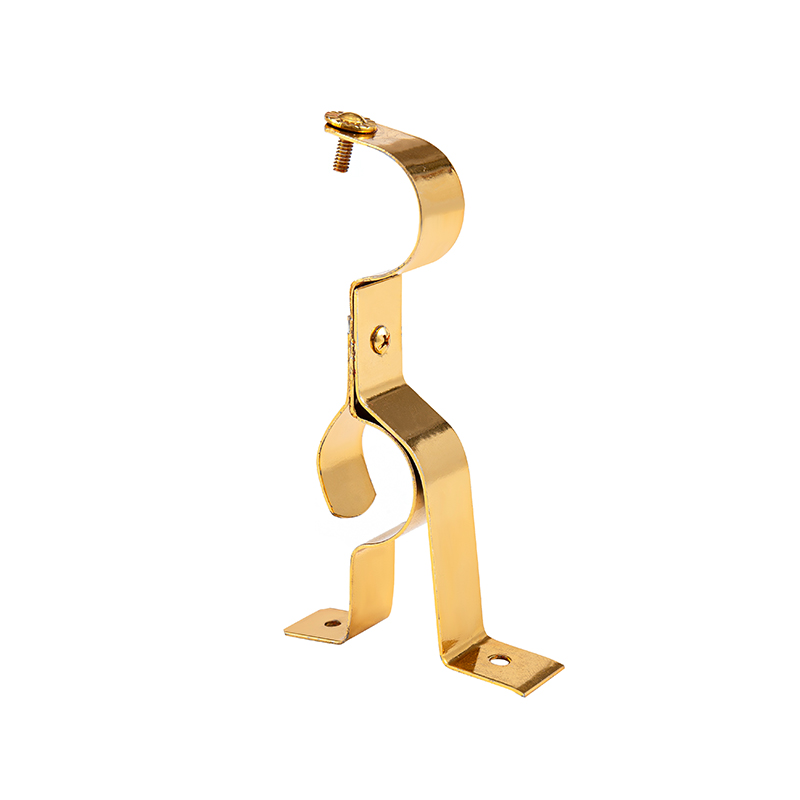
For double layers, this configuration needs a bracket that can hold both rods on the same corner point, with the front rod standing further away from the wall than the back rod. A metal double curtain bracket is designed for exactly this task: it supports two rod positions, distributes the combined weight of two sets of curtains across a wider mounting footprint, and keeps the rods parallel so that the front and back panels stack uniformly. Because corner brackets carry more load than a standard wall bracket—two rods, two sets of rings, and two layers of fabric—the quality of this single component has an outsized effect on the whole installation.
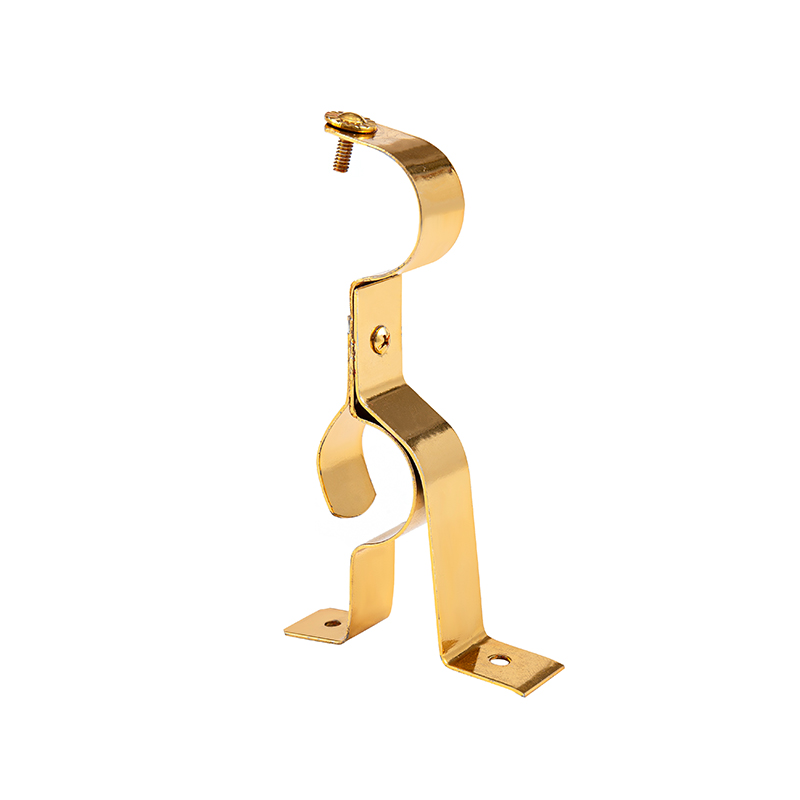 Custom Metal Double Curtain Bracket Suppliers, FactoryZhejiang Riyuexin Trading Co., Ltd. is China custom Metal Double Curtain Bracket suppliers and factory. Curtain Bracket Metal Double Bra...View Product →
Bent or Joined Track Systems
Curtain track systems offer a different solution that is especially well suited to corner windows and bay windows. Instead of round rods, a track system uses an extruded channel with gliders or carriers inside. The track can be cut to length, and corner pieces join two sections at the required angle. Because the gliders travel inside the channel, the curtain can pass through the corner more smoothly than it can on a round rod with rings.
An aluminum curtain track is the more durable choice for this application because aluminum resists bending under load and keeps its shape at the joint. Tracks are also easier to install on walls that are not perfectly straight, since the corner piece absorbs minor angular variance without affecting the movement of the panels. The trade-off is visual: a track does not have the same decorative presence as a round rod with finials, so designers often hide track systems behind a pelmet or valance. If your priority is smooth operation and light control rather than a decorative rod aesthetic, a double track with a corner connector is frequently the superior technical solution.
Telescoping Rods for Non-Standard Returns
Corner windows are often accompanied by short return walls, angled bays, or asymmetrical openings where the distance from the corner to the end wall is not a standard length. Telescoping rods solve this problem by allowing the rod length to be adjusted on site. A telescoping double rod setup can be shortened or extended to fit the exact measurement of each wall segment, which eliminates the need for custom cutting and reduces the risk of ordering a rod that is two inches too short.
The flexibility of this approach is particularly valuable in older buildings where walls are not plumb and floor-to-ceiling heights vary. Placing a telescoping rod at the corner with an adjustable length means you can fine-tune the overlap between the two panels so that no light leaks through the joint. For a detailed explanation of how adjustable systems work and where they are best applied, the article on how an adjustable curtain rod provides installation flexibility covers the practical trade-offs in more depth.
Choosing the Right Rod Material for a Corner Double Setup
Material selection matters more in a corner installation than in a straight-wall installation because the hardware is doing double duty. The rod has to carry two layers of fabric, resist the torsional force applied at the corner joint, and remain straight across a span that may be longer than the window itself. Choosing a rod that is too light for the job is the most common reason a corner curtain system sags within the first year of use.
Aluminum Rods
Aluminum is the most forgiving material for a double corner system. It is lightweight, which reduces the load on every bracket, and it resists corrosion in humid environments. Aluminum rods with a wall thickness of at least 1.0 millimeter and a diameter of 28 millimeters or larger can span typical window widths without noticeable deflection, even when carrying two layers of medium-weight fabric. For a double layer setup, the reduced weight of the rod itself is a real advantage, because every additional pound on the front rod increases the leverage placed on the corner bracket.
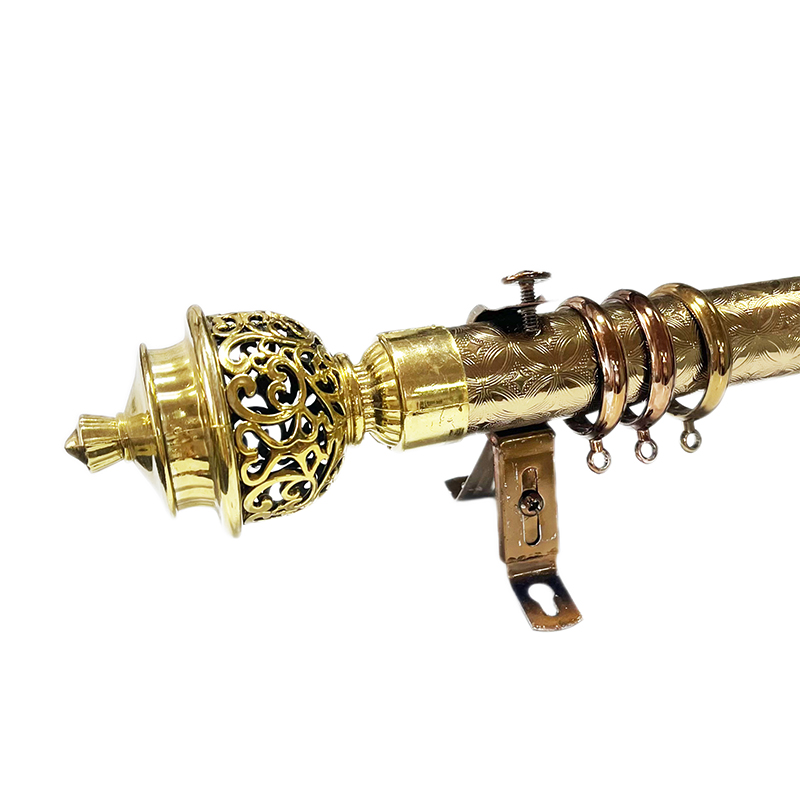
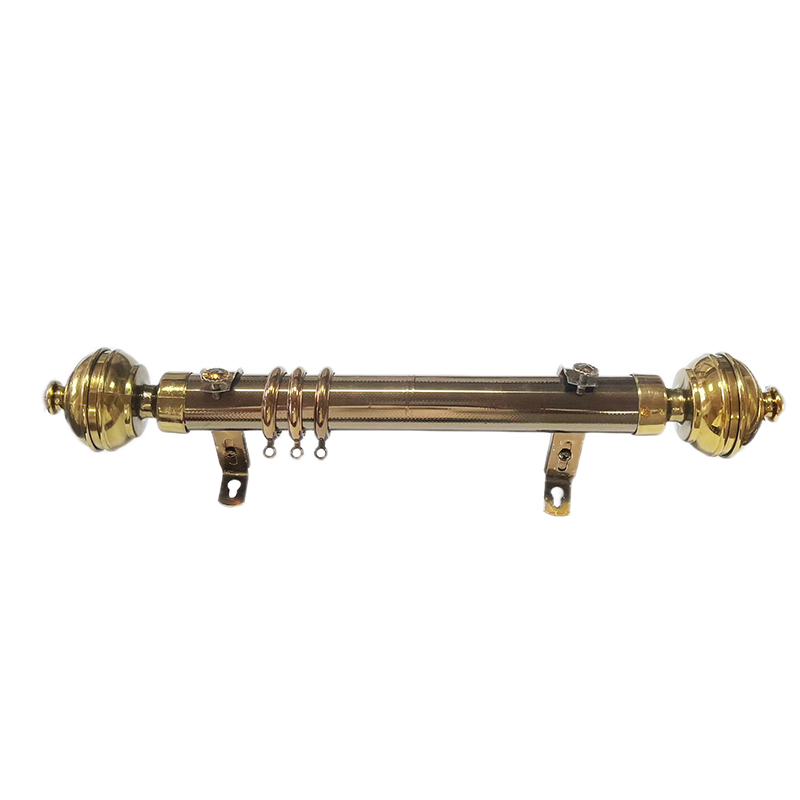
Aluminum also accepts a wide range of finishes, including powder coating, anodizing, and decorative wraps. A dual crescent aluminum curtain rod is an example of a decorative aluminum profile that maintains the strength of a round rod while adding an ornamental shape at the top of the rod, which can be useful when the rod is visible above sheer panels. The crescent profile also gives the ring a defined track to follow, reducing lateral slipping when the curtain is drawn open and closed.
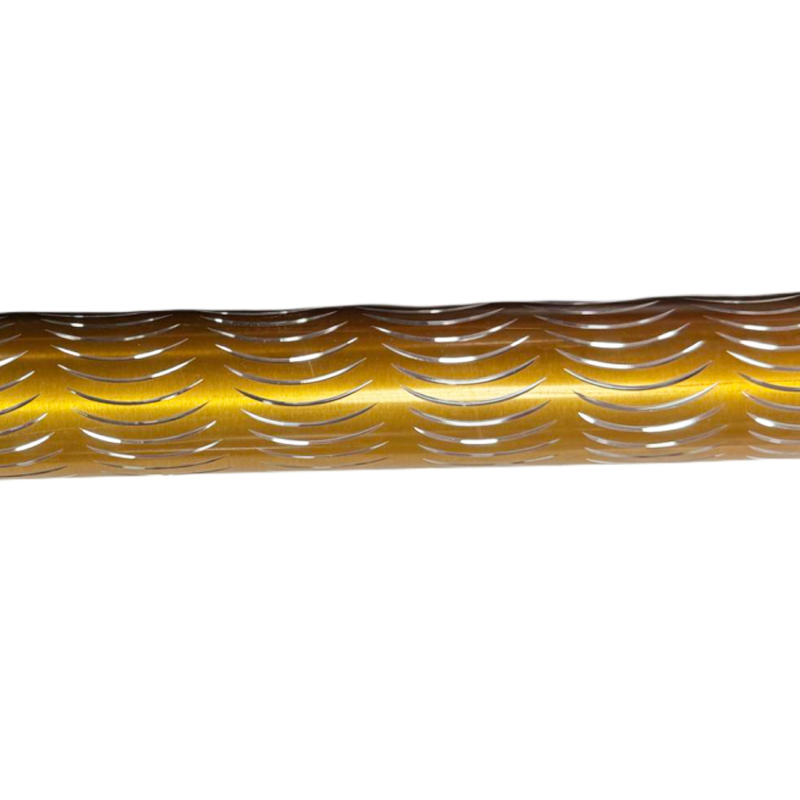 Custom Dual Crescent Aluminum Curtain Rod Suppliers, FactoryZhejiang Riyuexin Trading Co., Ltd. is China custom Dual Crescent Aluminum Curtain Rod suppliers and factory. Redefining large-span windo...View Product →
Iron Rods
Iron rods bring strength and a distinct industrial or traditional character to a window treatment. However, in a corner double configuration, iron requires careful engineering support. A solid iron rod is significantly heavier than an aluminum rod of the same diameter, which means the corner bracket must be anchored into a structural part of the wall, not just into drywall. If the bracket is mounted into plaster or standard drywall without a toggle anchor, the combined weight of two iron rods and two layers of curtain will eventually pull the bracket away from the wall.
Iron is most appropriate when the visual style genuinely demands it, such as in loft interiors, farmhouse designs, or traditional rooms where the rod itself is a design feature. In those cases, the double layer should be planned with the heavier fabric on the inner rod and the lighter decorative layer on the outer rod, so the center of gravity stays close to the wall. Iron also pairs well with telescoping designs, since the adjustable mechanism is typically built from steel and can handle the weight of the rod body itself.
PVC-Wrapped Rods
PVC-wrapped rods use a metal core covered with a decorative PVC film that simulates wood grain, metallic finishes, or solid colors. They are a budget-friendly option and offer a wide range of surface appearances without the cost of real wood or the maintenance of painted metal. For a corner double setup, the important detail is the core: the load-bearing capacity comes entirely from the metal inner tube, not from the PVC wrap. You should confirm the core material and wall thickness with the supplier before using a PVC-wrapped rod on a double corner installation where the outer rod carries a full blackout panel.
PVC-wrapped rods are best suited to shorter spans and lighter fabrics, such as sheer overlays or lightweight decorative panels. On longer runs with heavy double layers, an aluminum or iron rod is the safer structural choice. A detailed comparison of aluminum, PVC-wrapped, and iron curtain rods provides a useful reference when you are evaluating the weight and deflection characteristics of each material side by side.
| Material | Relative weight | Load capacity | Best use | Corner suitability |
|---|---|---|---|---|
| Aluminum | Light | High for its weight | Double layers, long spans, modern interiors | Excellent; reduces bracket load |
| Iron | Heavy | Very high | Industrial and traditional styles | Good, but requires solid wall anchoring |
| PVC-wrapped | Light to moderate | Moderate | Budget projects, lighter fabrics | Acceptable on short returns only |
Brackets, Rings, and Finials: Hardware That Holds the System Together
The rods are only one part of a double corner curtain rod system. The brackets carry the structural load, the rings determine how smoothly the curtains move, and the finials close off the visible ends. Each of these components has a specific role in a corner installation, and choosing them correctly is often the difference between a satisfying setup and a frustrating one.
Brackets: The Corner Is Won or Lost Here
No component matters more at a corner than the bracket. A standard single bracket mounts to a flat wall and supports one rod at a fixed distance from the wall. A corner installation needs a bracket that can be mounted on the wall close to the edge, holding the rod parallel to the wall while also clearing the adjacent wall. When the bracket is placed too far from the corner, the curtain panel ends early and leaves a visible gap. When it is placed too close, the finial or the rod end can collide with the adjacent wall, preventing the panel from opening fully.
For double layers, the corner bracket must create two distinct rod positions. The back rod sits closer to the wall, typically two to three inches out, so the sheer layer does not touch the glass. The front rod sits further out, usually five to seven inches from the wall, so the blackout panel has clearance to stack behind the decorative layer without putting pressure on it. A double bracket achieves this by using two separate rod rests on the same wall-mounting plate. Because the corner bracket supports two rods at different distances, it experiences more torque than a single rod bracket, which is why selecting a robust option matters in a corner installation.
Curtain Rings: Smooth Movement on Both Layers
The rings determine whether the daily operation of the curtain is pleasant or annoying. On a double rod system, the back rod and the front rod need rings sized to their respective rod diameters; a ring that is too large will rock sideways, and a ring that is too small will bind against the finish. Standard metal rings with a smooth inner surface work well on aluminum and iron rods, while plastic or nylon rollers are a good choice for track systems.
For corner installations specifically, the rings on the inner rod should not have decorative protrusions that could catch on the corner bracket. If the back sheer panel uses clip rings, check that the clip mechanism does not extend beyond the ring body, because at the corner the clearance between the rod and the adjacent wall is tighter than anywhere else on the run. The smooth operation of the whole system relies on the rings being matched to the rod diameter and to the fabric header type.
Finials: Where They Matter and Where They Don’t
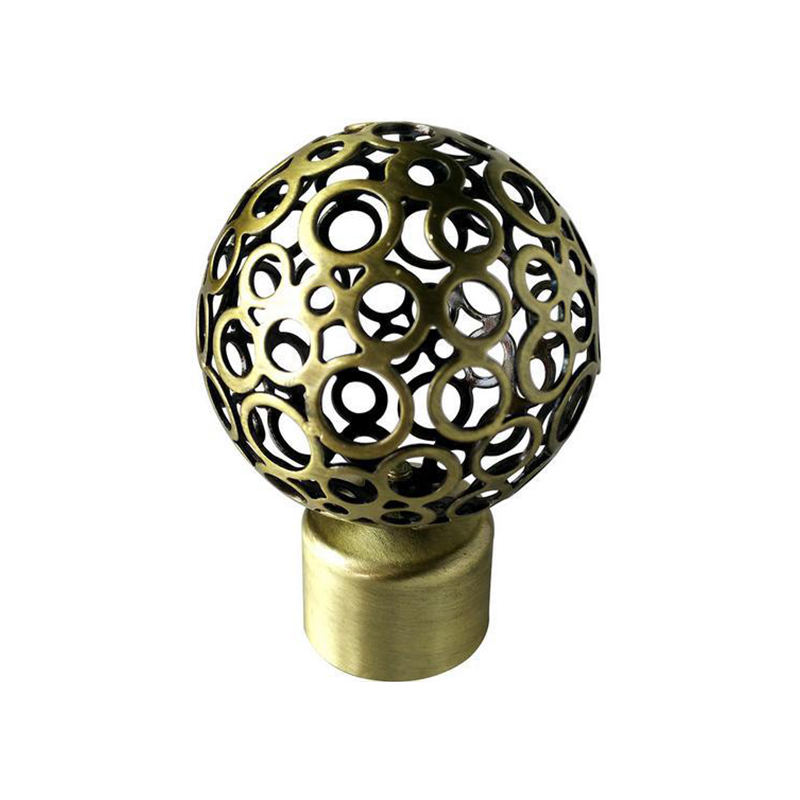
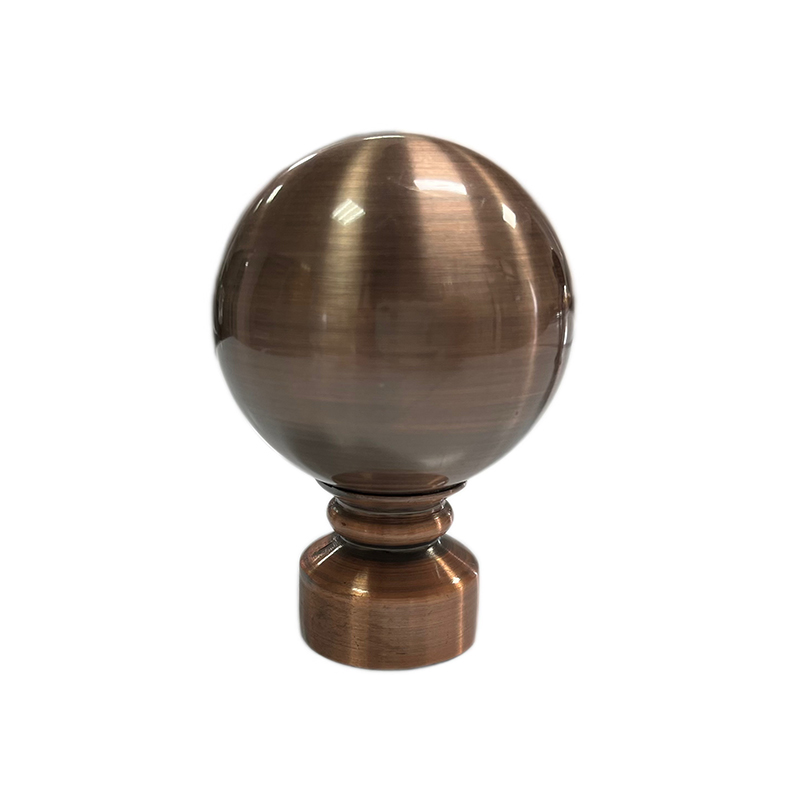
Finials serve two purposes: they keep the rings from sliding off the end of the rod, and they complete the visual design of the window treatment. In a double corner system, finials appear only at the two outer ends of the installation—the far end of the rod on wall A and the far end on wall B. The corner itself does not get a finial, because the rods either meet at the corner bracket or are joined by a connector. This means the design of the finial contributes less to a corner installation than the design of the bracket, which is visible at the joint.
Still, the finish of the finial must match the finish of the rod and the bracket. A polished chrome finial on a satin silver rod looks mismatched, and the corner draws attention to exactly that mismatch because the eye is naturally drawn to the angle where the walls meet. When ordering a double corner system, specify the same finish family for rods, brackets, rings, and finials, even if the exact texture varies slightly between components.
Planning the Two Layers: Blackout, Sheer, and Everything Between
Once the hardware is understood, the next decision is what the two layers will actually be. The fabric choices affect the rod weight, the ring type, and the projected width of the brackets. Planning the layers before you buy the hardware prevents the common mistake of installing a rod system that is structurally fine but visually and functionally wrong for the fabric.
The Blackout-Plus-Sheer Combination
The most common double corner application by far is a sheer layer on the inner rod and a blackout layer on the outer rod. The sheer panel stays closed all day, softening incoming sunlight and providing daytime privacy while still allowing natural light into the room. The blackout panel is drawn only when needed—at night, during hot afternoon sun, or when watching a movie in a dimmed room. This combination is popular in bedrooms, nurseries, and home theaters, where both light control and privacy are non-negotiable.
At a corner window, this arrangement requires the inner sheer rod to have a shorter projection from the wall than the outer blackout rod, usually by two to three inches. If both rods sit at the same distance, the blackout panel will rub against the sheer panel every time it is drawn, causing fabric wear and making the operation feel sticky. The corner bracket must therefore be designed or adjusted so that the two rods have a clear, consistent gap along their entire length, including at the turn.
Matching the Two Layers Visually
A double corner installation is visually stronger when the two layers work as a composition rather than as two unrelated pieces of fabric. The sheer layer should be neutral enough that it does not fight with the pattern of the blackout layer, and the blackout panel should relate to the room’s color palette. When the curtains are fully open, both panels stack at the outer ends of the rods, not at the corner, which means the corner area stays visually clear and the window looks larger than it would with fabric pulled to both sides.
From a procurement perspective, buyers should confirm that the chosen fabrics are supplied in widths that suit the rod span. A blackout fabric that is too narrow for the full wall-to-wall run forces a seam at the corner, which is both a visual weakness and a potential point of light leakage. Ordering panels wide enough to wrap from the outside edge of one rod past the corner and onto the adjacent wall is a simple way to avoid that problem.
Measuring and Planning a Corner Installation
Accurate measurement is the foundation of every successful double corner curtain rod project. The measurement process for a corner is different from a straight wall because you are dealing with three dimensions: the length of each wall segment, the angled relationship between them, and the projection distance required for two layers of fabric.
Measure Each Wall Segment Separately
Never assume that the two walls meeting at a corner are the same length, even in a room that appears symmetrical. Measure the full span of each wall segment separately, from the corner to the point where you want the rod to end. Write down the two measurements clearly, because they will not match perfectly in most real-world installations. The difference usually ranges from one to four inches, and if you order a single rod that is meant to wrap the corner, that difference becomes immediately visible at the joint.
If you are using two independent rods meeting at a central corner bracket, each rod is measured from the center of the corner bracket to the center of the end bracket on its own wall. Add enough length for the finials and for the few inches of rod that must pass beyond the outermost ring so the curtain can be fully opened. A common mistake is measuring the rod by the window width alone, ignoring the extra space needed for the fabric stack when the curtain is drawn open.
Projection and Stack-Back Space
The bracket projection determines how far the rod stands away from the wall, which directly affects how much space is available for the fabric stack. With two layers, each rod needs its own projection, and the combined stack of the front and back panels needs enough clear space when fully open. A standard single rod projects three to four inches from the wall; a double system needs five to seven inches for the front rod so that the stacking fabric does not press against a window sill, a piece of furniture, or a heating unit.
Stack-back width is the horizontal space occupied by the curtain when it is fully drawn open. As a planning rule, the stack-back is roughly one-third of the window width for medium-weight fabrics and closer to 40 percent for heavy blackout panels. Multiply this by two layers, and you will quickly see why corner windows need rods that extend well beyond the glass on both sides. If the wall return at each end of the corner is too short to accommodate the stack-back, plan for the curtain to split at the corner, with one panel staying on each wall rather than both panels sliding to the same side.
Mounting Height
Mounting height for a double corner rod follows the same rules as a standard rod, with one adjustment: the higher the rod, the more visible the gap between the rod and the top of the window frame, so the two layers must be long enough to cover that distance. A good starting point is to mount the rod halfway between the top of the window frame and the ceiling, or roughly four to six inches above the frame if the ceiling is high. For a corner window where the two walls may have different ceiling heights on either side, mount both rods at the same absolute height above the floor rather than at the same distance from the ceiling, because the eye compares horizontal levels across the corner.
The full step-by-step procedure for positioning brackets, leveling the rods, and hanging the panels is covered in our complete curtain rod installation guide, which includes the tolerance checks that matter most when two walls meet at an angle.
Installation Walkthrough for a Double Corner Rod
The installation sequence below assumes you are using two independent rods with a double corner bracket at the joint. This is the most common and most reliable configuration, and it works for both straight rods and telescoping rods.
- Confirm the corner angle. Use an angle finder to measure the actual corner. Mark the angle on the corner bracket and verify that the bracket can accept that range. If the corner is out of square by more than two degrees, adjust the mounting shims rather than forcing the bracket flat against the wall.
- Mark the bracket positions on both walls. The corner bracket goes first, placed so that the two rod rests point along the exact lines of the two walls. Mark the end bracket positions on each wall based on the measured rod lengths, remembering to add stack-back clearance beyond the window edges.
- Mount the corner bracket. Use a stud finder to locate structural support in the wall behind the bracket position. If there is no stud at the exact point, use a toggle bolt rated for the combined weight of both rods and both layers of fabric. Tighten the fastener gradually so the bracket plate sits flush against both walls.
- Mount the end brackets. Position each end bracket so that it is level with the corresponding rod rest on the corner bracket. A laser level is the fastest way to guarantee that the two brackets on the same wall are aligned, especially when the wall is not perfectly true.
- Install the back rod first. Place the back rod into its rest on the corner bracket and into the back rest of the end bracket. Thread the sheer panel onto the rod with rings before seating the rod fully, because adding rings after installation requires removing the rod again.
- Install the front rod second. Follow the same process, threading the blackout or decorative panel onto the front rod before seating it in the front rest of both brackets. Confirm that the gap between the two rods is consistent along the entire run.
- Attach the finials and test the movement. Slide both panels open and closed several times. Watch the point where each panel reaches the corner: the fabric should not catch on the bracket, and the rings should not collide with each other at the joint. Adjust the bracket position or the ring spacing if any binding occurs.
What Buyers Should Check Before Ordering
For anyone purchasing a double corner curtain rod system in volume, whether as a retailer, an interior design firm, or a procurement professional sourcing on behalf of a client, the considerations extend beyond the aesthetics of the rod. The following points are the ones that most often create problems after the order is delivered.
Custom Lengths and Angle Tolerances
Standard off-the-shelf rods are manufactured in fixed lengths, and a corner installation rarely fits those lengths perfectly. Custom cutting is one of the main reasons to work with a manufacturer that can supply rods in exact dimensions. When ordering custom lengths, specify the outside diameter, the wall thickness, and the end configuration, and confirm that the rod is cut and finished at both ends so that finials and brackets fit without modification.
Angle tolerance is another area where procurement specifications can prevent field failures. A corner bracket that is designed for exactly 90 degrees may not fit a wall corner that is actually 89.5 degrees or 91 degrees across the full height of the room. Ask the supplier for the acceptable angular range of the corner connector, and request a sample if you are ordering in volume. A small investment in verifying the tolerance before mass production saves the cost of field rework later.
Finish Consistency Across Components
Because a double corner system combines rods, brackets, rings, and finials from potentially different product lines, finish consistency is a practical risk. Powder-coated finishes will not exactly match anodized finishes, and a slightly different texture between a rod and its bracket can be as visible as a different color. When ordering, specify one finish category for the entire system and ask the factory to confirm that all components are coated in the same batch or in the same color-matching standard. Buyers should also request photos of samples under natural light, because many finishes look different indoors under LED lighting than they do near a window.
Field Testing and Packaging
If you are purchasing a double corner system for a project with multiple identical windows, ordering one complete set first for field testing is a sound strategy. Install it, operate it for a few days, and note any binding at the corner, any sagging at the midpoint of the longer rod, and any gap where the panels meet at the joint. This test reveals issues that CAD drawings and samples cannot: how the fabric actually behaves on the rod, how the rings glide over the connector, and whether the bracket holds its position under repeated use.
Packaging is also worth specifying, especially for corner brackets and connectors, which have irregular shapes that are easy to damage in transit. If the components arrive bent or scratched, the entire installation schedule is delayed. Confirming that each bracket is individually wrapped and that rods are shipped with end caps and protective film reduces the risk of damage-related disputes and keeps the project moving.
Making the Final Decision
A double corner curtain rod is ultimately a coordination problem. The rods, the brackets, the corner hardware, the rings, and the fabric all have to work together at a point where two walls meet at an angle that is rarely exactly 90 degrees. Approaching the project as a system rather than as a single product is the mindset that leads to a successful result.
For most installations, the strongest combination is two independently mounted rods with a metal double bracket at the corner, aluminum or iron rod bodies chosen to match the weight of the fabric, rings sized to the rod diameter, and panels wide enough to overlap at the joint. For installations where smooth movement across the corner is the top priority, an aluminum track system with a corner connector is a better technical fit. In both cases, measuring each wall separately, confirming the angle tolerance of the hardware, and testing the operation before finalizing the installation will prevent the small gaps and binding issues that plague badly planned corner installations.
The products and details described in this guide represent the engineering side of what is really a simple goal: to close off a corner window cleanly, with two layers of fabric that look good, move smoothly, and block light where light should not pass. When the components are chosen for their role in the system rather than for their appearance in a catalog, a double corner curtain rod stops being a compromise and becomes one of the most effective window treatments in the home.